
Chrome Steel Balls vs 440C Stainless Balls for Precision Bearings
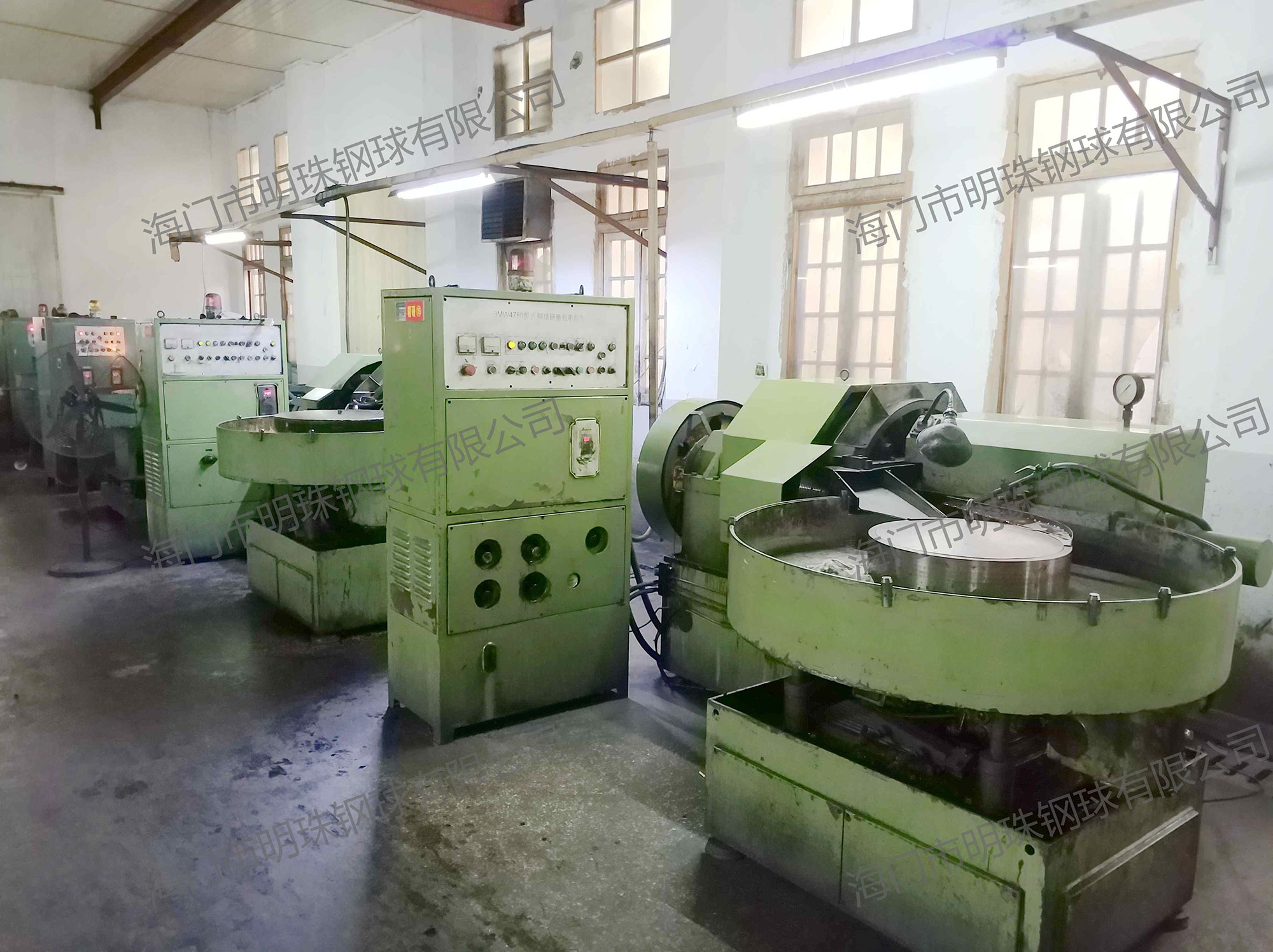
Surface finishing of precision bearing balls. Finish control applies equally to chrome steel and 440C stainless, and is one of the parameters that has to stay fixed across repeat batches.
Short answer. Chrome steel (AISI 52100 / DIN 100Cr6 / JIS SUJ2) is the harder and more fatigue-resistant of the two bearing ball materials. It is supplied from 1 mm to 50.8 mm in G10–G1000 with a through-hardened core at HRC 60–66, and an isotropic finish option is available. AISI 440C martensitic stainless is supplied from 0.5 mm to 50.8 mm in G10–G1000 at HRC 58–62, with a maximum phosphorus and sulfur content of 0.07%. Chrome steel wins on rolling-contact fatigue and material cost in clean, lubricated, protected bearings. 440C wins wherever moisture, washdown, sterilization or mild chemical exposure would corrode a chrome ball before it ever fatigued.
Material selection is the easy half of that decision. The harder half is holding the decision constant once a program moves from sample approval to annual volume. Two balls that meet the same grade on paper can still diverge on heat-treatment condition, surface finish, cleanliness and documentation — and those variables, not the datasheet headline, determine whether a bearing line stays stable for three years. The chrome steel versus 440C question therefore gets asked twice: once by a design engineer comparing hardness against corrosion, and once by a buyer qualifying a supplier who has to reproduce that comparison batch after batch.
This article works through both halves. It compares the two materials on the parameters that matter inside a bearing, then sets out how a buyer locks the choice into a long-term supply arrangement with batch traceability, because that is where most programs lose the gains made during design.
The Problem: A Datasheet Comparison That Hides Three Trade-Offs
Chrome steel and 440C are not competing grades of the same material. They are two different metallurgical strategies applied to the same geometry, and each one solves a failure mode the other handles less well. That is why a side-by-side datasheet read produces a false draw: the numbers look close, but they are measuring different risks.
The first trade-off is hardness against corrosion resistance. Chrome steel reaches HRC 60–66 through hardening, and often sits at HRC 62–64 in bearing service. 440C is specified at HRC 58–62, with the wider documented 440C range extending to HRC 65 depending on grade and heat-treatment condition. That four-point hardness gap is small on a spec sheet and meaningful in rolling contact, where fatigue life responds to hardness. But hardness is irrelevant if the raceway pits first. A ball that rusts in a washdown cycle fails earlier than a softer ball that does not.
The second trade-off is unit cost against replacement cost. Chrome steel is generally the lower material cost of the two. 440C carries a cost premium for alloy content and processing. That premium only pays back in environments where a chrome ball would need replacement because of corrosion rather than wear — and buyers who apply 440C to clean, dry, well-lubricated bearings pay the premium without collecting the benefit.
The third trade-off is specification against reproducibility. Both materials are available in the same nominal grade span, so a purchase order can look identical while the delivered batches are not. Grade defines dimensional and geometric tolerances. It does not define heat-treatment condition, surface finish consistency, residual magnetism, cleanliness or the documentation package that proves the batch matched the specification. In a bearing program, that gap between what was ordered and what can be proven is the most common source of line stoppage.
The cost of getting it wrong depends on where in the program the error surfaces. At design stage, a wrong material choice shows up as a field failure two or three years later, which is expensive to diagnose. At qualification stage, it shows up as a failed sample and a delayed launch. At volume stage, it shows up as a rejected incoming lot that halts assembly — the cheapest moment to catch it and the most disruptive to recover from.
Industry Background: Why Both Materials Stay in the Bearing Supply Chain
The global steel ball market was estimated at USD 12.91 billion for 2026 in a forecast published by Coherent Market Insights. The same report projects chrome steel balls holding a 45.7% share of the material segment in 2026, which is consistent with what bearing engineers already know: where corrosion is not the controlling risk, chrome steel remains the default bearing material by volume.
Growth forecasts for the category vary by methodology. One published projection puts the compound annual growth rate at 5.2% for 2026–2035, while other sources report 3.6% and 6.2% for comparable periods. The spread is largely explained by whether a study counts large-diameter grinding media alongside precision bearing balls; the two are commercially different products with different demand drivers, and mixing them distorts the average. For a bearing buyer, the useful reading is not the headline growth rate but the split between precision and non-precision demand.
The technical framework around the choice is well codified. ISO 3290-1:2014 specifies requirements for finished steel balls for rolling bearings and defines grades from G3 to G700, and commercial bearing programs normally run within that scale rather than at its finest end. ASTM A295/A295M covers high-carbon anti-friction bearing steel, which is the material standard family behind AISI 52100. On the trade side, steel balls for bearings fall under HS code 8482.91, covering balls, needles and rollers. These three references matter to a buyer because they establish what can legitimately be claimed on an inspection certificate, and what a supplier is actually certifying when it stamps a grade on a box.
Both materials persist because the underlying demand is not uniform. Automotive transmissions, electric-motor bearings, gearbox assemblies and general anti-friction bearings operate in protected, lubricated conditions where chrome steel fatigue performance dominates the economics. Chemical pumps, medical motion components and surgical instrument bearings operate in conditions where the environment attacks the steel directly, and there 440C earns its premium. A supplier that can produce both is not hedging; it is reflecting the actual split in the installed base.
Material Behaviour: What Each Ball Actually Does Inside a Bearing
Chrome Steel: AISI 52100 / DIN 100Cr6 / JIS SUJ2
Chrome steel for precision balls is a high-carbon chromium bearing steel, available from 1 mm to 50.8 mm in G10–G1000 with a through-hardened structure at HRC 60–66. Surface roughness can be held to Ra ≤ 0.05 µm on bearing steel ball specifications, and an isotropic finish option is available where the surface texture must not vary with direction. The material is standardized across AISI 52100, DIN 100Cr6 and JIS SUJ2, so a specification written in one nomenclature can be cross-checked against the others.
Its advantage is rolling-contact fatigue. In a clean bearing with adequate lubrication and no corrosive ingress, chrome steel delivers the longer life of the two materials, and its higher peak hardness supports marginal rolling-contact efficiency in dry or well-protected conditions. Typical applications are anti-friction bearings, automotive transmissions, precision instruments and valve train components.
Its limitation is equally clear. Chrome steel requires rust-preventative lubrication and protection from moisture. In a wet plant, a washdown line or an unsealed assembly, corrosion can remove the fatigue advantage before the bearing has run long enough to use it.
AISI 440C: Martensitic Stainless at Bearing Hardness
AISI 440C (UNS S44004) is a martensitic stainless steel that can be hardened to bearing-relevant hardness while retaining corrosion resistance. Precision balls in 440C are supplied from 0.5 mm to 50.8 mm in G10–G1000, specified at HRC 58–62 in the current product specification, with a maximum phosphorus and sulfur content of 0.07%. The tighter impurity ceiling matters because phosphorus and sulfur are the elements most associated with segregation and inclusion-related fatigue initiation in hardened steel.
The material survives salt-spray and mildly corrosive service that would corrode 52100, which is why it is specified for high-precision bearings, surgical and dental instruments, aerospace actuators, chemical pumps and watch movements. In wet plants it simplifies maintenance, because it tolerates moisture that chrome steel needs lubrication to resist.
Its limitation is on the hardness side. 440C is specified at a lower hardness band than chrome steel, and in a clean, dry, perfectly lubricated bearing it will not match the rolling-contact fatigue life of a 52100 ball at HRC 62–64. Applying 440C to a protected application pays the alloy premium without recovering it.
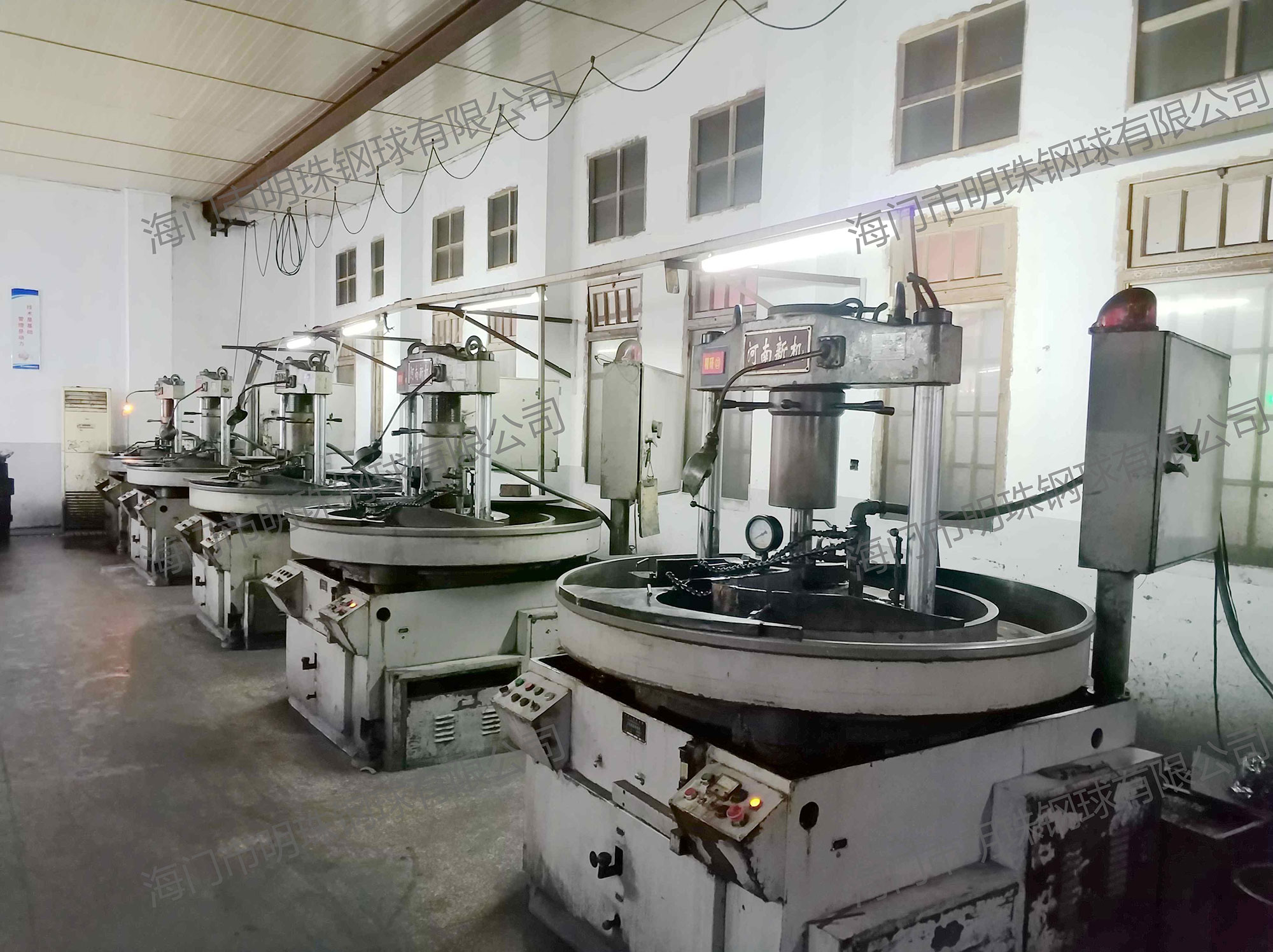
Grinding stage. Dimensional and geometric grade is set here, but heat-treatment condition and finish consistency must also be verified before the batch can be released.
The Trade-Off in Practice: Fatigue Versus Corrosion
The practical decision rule is to identify which failure mode arrives first. If the bearing will fail from fatigue — a clean, lubricated, sealed or well-protected assembly — chrome steel is the correct starting point and 440C is a premium paid for protection the bearing does not need. If the bearing will fail from corrosion — moisture ingress, washdown, sterilization cycles, process fluid, coastal humidity — 440C removes that failure mode, and the lost hardness is a deliberate and acceptable trade.
Both materials are low-friction in service. The difference is not friction but failure sequencing: chrome steel raises the fatigue ceiling, 440C raises the corrosion floor. A buyer who frames the choice this way will usually find the answer in the application description rather than in the datasheet.
Where Neither Material Is the Answer
Two adjacent specifications are worth ruling out explicitly, because they are frequently proposed as compromises and are usually not.
Austenitic stainless such as 316 offers markedly better chloride and pitting resistance than 440C, but it is non-hardenable and soft. It suits marine, chemical and process service where hardness is secondary; it does not suit high-load rolling contact, where a soft ball will deform rather than roll. Conversely, chrome-plated carbon steel balls offer a lower upfront cost with a corrosion barrier, but the coating can wear or spall under load, and the underlying carbon core runs at roughly HRC 50–58 rather than bearing hardness. For a precision bearing either substitution trades a known limitation for an unknown one.
Where temperature is the controlling variable rather than corrosion, M50 high-speed steel enters the discussion at HRC 62–66 with high-temperature stability, and is specified for elevated-temperature bearing service where 52100 would lose hardness. It is a different decision, not a variant of this one.
Specification Comparison: Chrome Steel vs 440C Stainless
The table below sets out the parameters a bearing buyer should place side by side before releasing a purchase order. All values are drawn from current product specifications.
| Parameter | Chrome Steel Ball | 440C Stainless Steel Ball |
|---|---|---|
| Material designation | AISI 52100 / DIN 100Cr6 / JIS SUJ2 | AISI 440C / UNS S44004 |
| Material standard family | ASTM A295/A295M high-carbon anti-friction bearing steel | Martensitic stainless, hardenable |
| Diameter range | 1 mm – 50.8 mm | 0.5 mm – 50.8 mm |
| Precision grades | G10 – G1000 | G10 – G1000 |
| Hardness | HRC 60–66 (often 62–64 in bearing service) | HRC 58–62 specified; wider 440C range documented to HRC 65 |
| Impurity limit | Governed by ASTM A295/A295M bearing-steel practice | Max 0.07% phosphorus and sulfur |
| Surface finish | Ra ≤ 0.05 µm on bearing steel ball spec; isotropic finish option available | Polish levels per grade; passivation available |
| Corrosion resistance | Requires rust-preventative lubrication; corrodes in wet service | Survives salt-spray and mildly corrosive service where 52100 rusts |
| Rolling-contact fatigue | Longer life in clean, protected, lubricated bearings | Lower peak hardness band than chrome steel |
| Relative material cost | Generally lower | Higher, from alloy content and processing |
| Maintenance requirement | Lubrication management; rust prevention | Passivation; tolerates moisture, simplifying wet-plant maintenance |
| Typical bearing applications | Anti-friction bearings, automotive transmissions, precision instruments, valve train components | High-precision bearings, surgical and dental instruments, aerospace actuators, chemical pumps |
| Where it should not be used | Wet, washdown or chemically exposed bearings without protection | Clean, dry, protected bearings where maximum fatigue life is the objective |
Step-by-Step: From Application to Released Purchase Order
The sequence below is written for the decision-to-execution stage, where the material has been shortlisted and the buyer now has to convert it into a specification that can be inspected and reordered.
Step 1 — Document the Service Environment First
Record operating temperature, lubrication method, moisture exposure, process chemistry, cleaning or sterilization cycles, and maintenance interval before comparing materials. These five inputs decide the answer more reliably than any single mechanical property. A bearing that sees autoclave cycles is not in the same decision as a bearing that sees filtered oil at a controlled temperature.
Step 2 — Identify the Controlling Failure Mode
State explicitly whether the bearing is expected to fail from fatigue or from corrosion. If corrosion is expected, specify 440C. If fatigue is expected, specify chrome steel. Where both are plausible, split the assembly: use 440C on the exposed or wetted positions and chrome steel on the protected positions, rather than compromising both with a single material.
Step 3 — Match Precision Grade to the Bearing Envelope
Both materials are available in G10–G1000. Precision grades G10–G25 suit tolerance-critical assemblies, while G100–G1000 covers general bearing and non-critical duty. Running a finer grade than the raceway can use raises cost without raising performance; running a coarser grade than the assembly needs transfers vibration and noise into the system.
Step 4 — Fix Surface Finish and Surface Treatment
Specify roughness, finish type and any surface treatment on the drawing, not in conversation. Chrome steel bearing balls are specified to Ra ≤ 0.05 µm on the bearing steel specification, with an isotropic finish option where directionality must be controlled. For 440C, passivation is the relevant treatment, and passivation and neutral salt-spray reports are available on request to document it.
Step 5 — Define Acceptance Inspection and the Document Package
Inspection should be written into the order, not assumed. Standard practice on these materials is 100% automated machine-vision sorting for size, roundness, surface defect and appearance, supplemented by hardness, roundness, microstructure, roughness and material verification by PMI or chemical analysis. Documentation includes a material test report, EN 10204 2.1 or 3.1, and COA, with PPAP, FAI, NACE MR0175 and AMS certificates available on request.
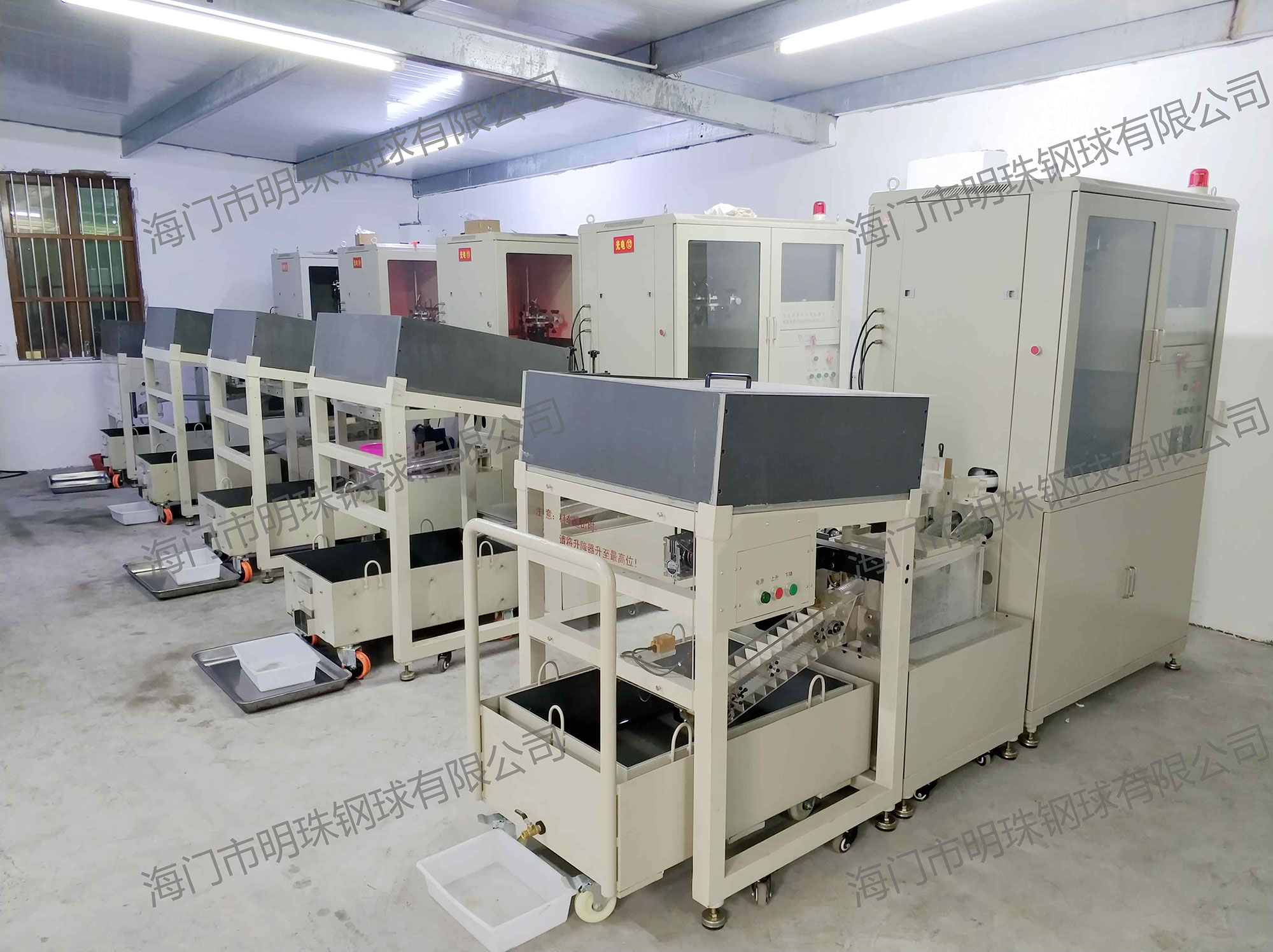
Automated surface-defect inspection. The inspection record, not the grade stamp, is what allows a buyer to prove batch conformity months later.
Step 6 — Lock Commercial and Long-Term Supply Terms
Standard catalog sizes carry an MOQ from 100 pieces, with precision G5/G10 grades and small sizes potentially requiring higher minimums. Delivery for standard stock sizes runs 7–20 days; special alloys and custom orders run 20–50 days, and G3/G5 ultra-precision grades run 25–50 days. Payment terms are T/T 30/70 as standard, L/C at sight for large orders, PayPal for samples, and open account or Net-30 negotiable for qualified repeat buyers. Incoterms available are EXW, FOB (Shanghai, Ningbo), CIF, DAP and DDP.
Use Cases: Where the Choice Is Decided by the Environment
Chemical Processing Pumps
Pump bearings and valve trim in chemical service are exposed to process fluid, cleaning agents and moisture that make corrosion the controlling failure mode. 440C is specified here because the corrosion resistance preserves the bearing long enough for its hardness to matter. The relevant supporting specification is the surface condition: passivation plus a neutral salt-spray report documents that the surface treatment was performed, which is the part of the order most often left unwritten.
Medical Device Motion Components
Motion components in medical devices and dental handpieces face repeated sterilization, body-fluid exposure and intermittent high-precision operation. 440C is the standard choice in this category because it combines bearing-relevant hardness with the highest corrosion resistance available among the hardenable stainless ball materials. Mirror polish is typically specified, and buyers in this segment commonly require the supplier to work with ASTM F899 and ISO 13485 awareness, alongside full material traceability.
Surgical Instrument Bearings
Surgical instruments and orthopedic instrument pivots combine small ball diameters, tight geometric tolerance and aggressive cleaning between uses. 440C in the 0.5–50.8 mm range at precision grade covers this requirement, and the documentation package matters as much as the ball: lot control and traceability are what allow an instrument maker to answer a complaint six months after shipment.
Automotive and Electric-Motor Bearings
Transmission bearings, wheel-hub bearings, e-axle reduction gears and electric-motor bearings operate in protected, lubricated conditions where fatigue dominates. Chrome steel at HRC 60–66 is the appropriate material, and the qualification focus shifts from corrosion to consistency: ball diameter uniformity, fatigue life rating, and traceability under a quality system such as IATF 16949:2016.
Long-Term Supply: Batch Traceability and Annual Contracts
A material decision only holds if the supply arrangement can reproduce it. That is the point at which chrome steel versus 440C stops being a metallurgy question and becomes a supplier question, and it is the reason buyers evaluating a long-term steel ball supplier with batch traceability and annual contracts should assess five things rather than one.
Quality system and process control. Haimen City Mingzhu Steel Ball Co., Ltd. is a steel ball manufacturer founded in 1992, based in Haimen, Jiangsu Province, China, operating a 7,500 m² production base with 105 sets of processing equipment and a stable annual output of 2,500 tons. The company holds IATF 16949:2016 certification. Every batch of raw material is sampled and inspected before entering production, and finished balls pass through full automatic screening on roller-bar sorting equipment plus photoelectric surface-defect detection to remove defective product.
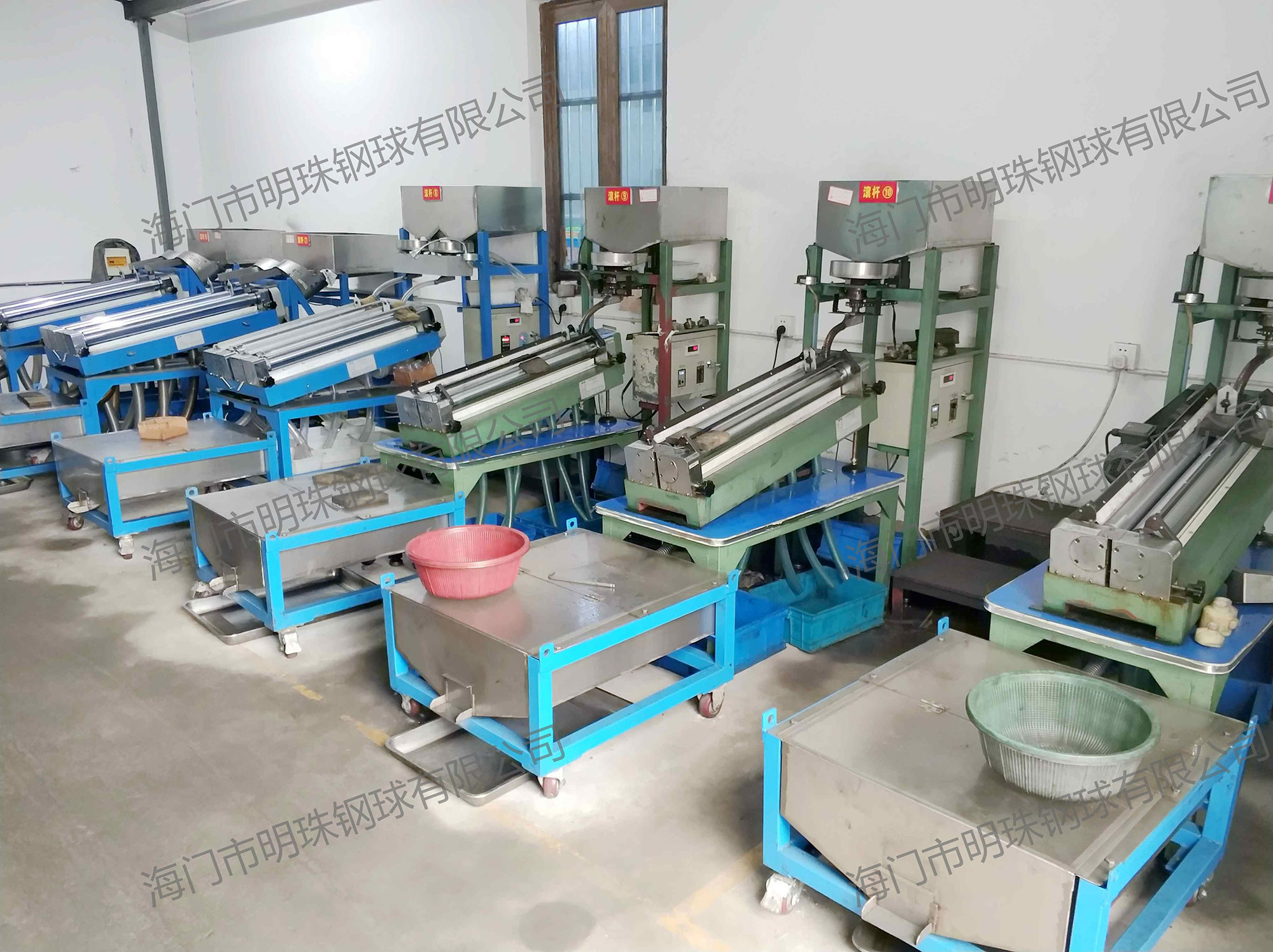
Roller-bar sorting. Reproducible grade conformity across annual batches depends on this stage running the same way on every lot.
Traceability documentation. MTR/COA is provided with each shipment, and material traceability is supported by MTR EN 10204 3.1 documentation on request. Hardness and surface reports are available on request for samples and production orders, as are PMI, neutral salt-spray reports and passivation reports. For buyers building an annual contract, the practical question is not whether documents exist but whether the same document set is issued on lot 1 and lot 20 — which is what turns a certificate into a traceability system.
Dual-material capability under one quality system. A bearing program that uses chrome steel in the protected positions and 440C in the exposed positions normally has to manage two suppliers, two inspection regimes and two document formats. Sourcing both from a single manufacturer consolidates the audit, aligns the documentation and shortens the qualification cycle when one position has to switch material.
Capacity for repeat supply. Rolling stock and backup tooling support stable repeat supply, and monthly production status updates give buyers visibility between orders. Standard stock sizes ship in 7–20 days; special alloys and custom orders run 20–50 days. These intervals should be written into the annual agreement as committed windows rather than treated as indicative estimates.
Commercial structure that supports a multi-year program. Open account or Net-30 terms are negotiable for qualified repeat buyers and established accounts, supporting long-term supply agreements in addition to T/T 30/70 and L/C at sight. For a program that draws against an annual volume commitment, the payment structure matters as much as the unit price, because it determines working capital across the contract period.
Frequently Asked Questions
What documentation supports batch traceability on chrome steel and 440C ball shipments?
Shipments are accompanied by MTR/COA, and material traceability is supported by MTR EN 10204 3.1 documentation on request. Hardness and surface reports are available on request for samples and production orders. For 440C, passivation and neutral salt-spray reports are also available on request, and PMI is available where material identity has to be verified independently of the mill certificate.
Can one supplier hold both chrome steel and 440C specifications without mixing batches?
Yes, provided the supplier operates a single quality system across both material lines and inspects to the same standard. Haimen City Mingzhu Steel Ball Co., Ltd. produces chrome steel and 440C stainless under IATF 16949:2016 certification, with raw material sampling before production, full automatic sorting on roller-bar equipment, and photoelectric surface-defect detection on finished balls. Acceptance inspection includes hardness, roundness, microstructure, roughness and material verification by PMI or chemical analysis, and each material line is documented by its own MTR.
What MOQ and payment terms apply when a bearing program uses both materials?
Standard catalog sizes carry an MOQ from 100 pieces; precision G5/G10 grades and small sizes may require higher minimums, and custom sizes, drilling or heat-treated variants are quoted per order quantity. Payment terms are T/T 30/70 as standard, L/C at sight for large orders, PayPal for sample fees, and open account or Net-30 negotiable for qualified repeat buyers. Available incoterms are EXW, FOB (Shanghai, Ningbo), CIF, DAP and DDP.
How should a buyer validate 440C against chrome steel before releasing volume?
Validate on the failure mode rather than on the datasheet. Request samples of both materials at the intended grade and diameter, confirm hardness by test report, and run the assembly in the actual service condition — including the cleaning or washdown cycle, which is where 440C and chrome steel diverge most. Standard sizes have low MOQ and samples are available, which allows the comparison to be run before an annual volume commitment is made.
What should a buyer look for in a long-term steel ball supplier with batch traceability and annual contracts?
Five things: a certified quality system covering both material lines, a consistent document set issued on every lot rather than on request only, inspection that combines 100% automated sorting with hardness and material verification, committed delivery windows for stock and custom sizes, and commercial terms that support a multi-year commitment such as negotiable open account for qualified repeat buyers. Buyers who want to test this against a live program can request the current catalog and specification set, or send a drawing and service description for a matched quotation covering both chrome steel and 440C.
Conclusion
Chrome steel and 440C stainless are separated by four points of hardness and a large difference in corrosion behaviour, and that combination decides most precision bearing programs. Where the bearing runs clean, lubricated and protected, AISI 52100 at HRC 60–66 delivers the longer rolling-contact life and the lower material cost. Where the bearing meets moisture, washdown, sterilization or mild chemical exposure, AISI 440C at HRC 58–62 removes the corrosion failure that lubrication alone cannot prevent.
The selection itself takes an afternoon. Keeping it stable across an annual contract takes a supplier with a quality system, a fixed inspection regime and a document set that looks the same on every lot. Haimen City Mingzhu Steel Ball Co., Ltd. produces both materials from 0.5 mm to 50.8 mm in G10–G1000, with full automatic inspection, MTR and EN 10204 3.1 traceability, and open account terms negotiable for qualified repeat buyers.
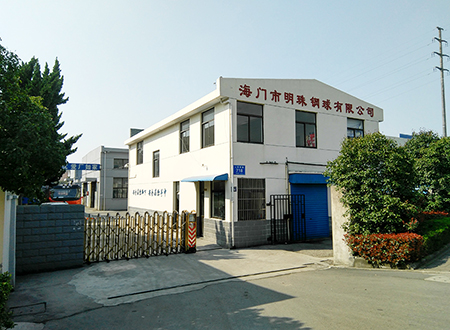
Production base in Haimen, Jiangsu Province, China. Chrome steel and 440C stainless bearing balls are produced and inspected on the same site.
To move from comparison to a released order, send the bearing application, service environment and drawing to info@hmmzsteelball.com, or contact the team by WhatsApp on +86 13912237934. Samples of both materials can be arranged for side-by-side validation before a volume commitment.
The full specification set, grade tables and packaging options are available in the Haimen Mingzhu steel ball product brochure, and product details are listed at www.hmmzsteelball.com.
Have Questions or Need More Details?
Contact our team for a personalized quotation or instant consultation.
Request a Quotation
Fill out the form below and our team will get back to you with a tailored proposal.
WhatsApp Direct Chat
Prefer to chat in real-time? Message us on WhatsApp for instant assistance & quick answers.
- Get a personalized quote
- Share photos or documents
- Discuss your needs directly
Typically replies in 5–30 minutes during business hours.