
What Does a Steel Ball Do? Rolling vs Sealing Roles in Industrial Equipment
Introduction: The Answer Depends on the Part, Not the Ball
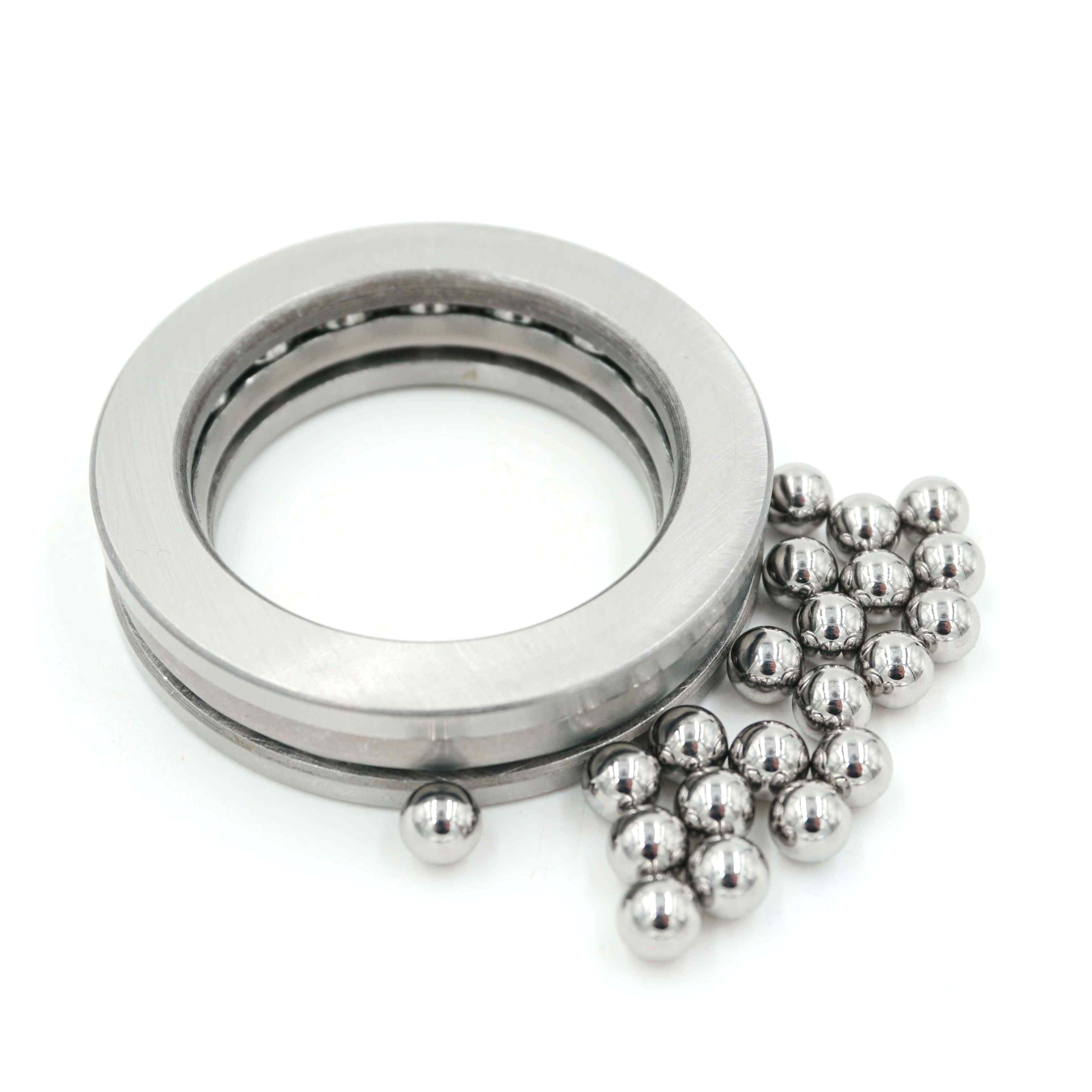
A steel ball has no function of its own. The assembly around it assigns one. A 25 mm ball in AISI 52100 held to a G10 tolerance is a rolling element when it sits between the inner and outer rings of a bearing, and a sealing member when it sits on the seat of a floating ball valve. The same object, two entirely different jobs, and two specifications that are not interchangeable.
Strip away the catalogue language and the answer is direct: in industrial equipment, steel balls perform two core functions.
Rolling. Inside a bearing, the ball is the rolling medium that carries load between rotating and stationary rings while replacing sliding friction with rolling contact. In automotive and electric-vehicle powertrains, steel balls are the critical rolling media that enable low-friction wheel-hub, transmission and e-axle bearings to work at high rotational speed.
Sealing and shut-off. Inside a valve, the ball is the sealing element. It lifts off the seat to open the flow path and presses onto the seat to isolate it. In floating and trunnion-mounted ball valves, needle valves and check valves, the ball performs the sealing and shut-off duty, actuated by quarter-turn on/off motion.
Once those two roles are separated, material choice stops being confusing. Chrome steel grades - AISI 52100, DIN 100Cr6 and JIS SUJ2 - dominate the rolling role because they through-harden to HRC 60-66 and hold dimensional stability under repeated load cycles. Martensitic stainless grades such as 420C and 440C dominate the sealing role because the ball must resist the process fluid as well as wear, and the same hardness-first logic does not apply. This guide treats steel balls as a functional category rather than a catalogue item, and shows how each role drives grade, hardness and material expectations.
Problem Definition: One Part Name, Two Incompatible Specification Logics
Buyers usually arrive at a steel ball enquiry holding one specific component type in mind - a bearing, or a valve - and assume the specification language carries over. It does not, because the word 'steel ball' collapses two different engineering problems into a single label.
The rolling logic is a fatigue problem. A bearing ball accumulates load cycles across the same contact footprint. Its specification is driven by through-hardness, dimensional stability, surface roughness, batch-to-batch diameter consistency and precision grade. Industrial bearing and power-transmission duty calls for HRC 60-66, ABMA G10-G40, dimensional stability, and low noise and vibration. Every one of those requirements exists to extend fatigue life and keep running torque predictable.
The sealing logic is a contact-and-medium problem. A valve ball seals by pressing against a seat, then survives whatever the pipeline carries - wet gas, mildly corrosive fluid, washdown chemicals, seawater. Its specification is driven by hardness in the contact zone, corrosion resistance to the specific medium, surface integrity at the seating band, and erosion behaviour. Valve and fluid-control service in oil, gas and petrochemical lines is specified with hardened martensitic stainless in the HRC 48-55 band, with NACE MR0175 available as an option.
The two logics overlap on hardness and tolerance, which is exactly why the distinction gets lost. But each is incomplete in the other's application. An annealed austenitic stainless ball such as 316 offers excellent chloride resistance yet is supplied soft - it carries load poorly, so it is not a bearing answer. Conversely, a ball selected purely on hardness and precision grade for a bearing duty may not have the corrosion resistance a wet, mildly corrosive valve service demands. Choosing the wrong side of that line is one of the most common specification errors in steel ball procurement.
Industry Background: Two Material Languages in One Market
The steel ball market is large and materially weighted toward the rolling side. The global steel ball market is estimated to reach a value of USD 12.91 billion by 2026, based on reporting by Coherent Market Insights. Within that total, chrome steel balls are projected to hold a 45.7% market share by 2026, making them the leading material segment.
That weighting is not accidental. Chrome steel - AISI 52100, DIN 100Cr6, JIS SUJ2 - is the established bearing-grade material, so a material mix that leans heavily toward chrome steel reflects how much of global steel ball volume is consumed as rolling elements inside bearings, transmissions and motors rather than as valve trim.
The standards landscape reinforces the split. ISO 3290-1:2014 specifies requirements for finished steel balls for rolling bearings and defines grades from G3 to G700 - a dedicated international standard for the rolling role. On the material side, ASTM A295/A295M covers the high-carbon, anti-friction bearing-quality steel used for bearing balls, including the 52100 grade. At the trade level, steel balls for bearings are classified under HS Code 8482.91, covering balls, needles and rollers.
What the standards picture does not show is a comparable single global standard for sealing-role balls, because valve trim is normally specified through the valve's own material and service requirements - NACE MR0175 for sour service, for example - rather than through a standalone ball standard. That asymmetry is one reason buyers who move between bearing and valve projects need to re-learn the specification logic each time.
Haimen City Mingzhu Steel Ball Co., Ltd. is a China-based steel ball manufacturer founded in 1992, based in Haimen, Jiangsu Province, producing bearing steel balls, chrome steel balls, stainless steel balls, carbon steel balls and custom machined, drilled, hollow and non-standard balls. The company operates a 7,500 m² production base with 105 sets of processing equipment, approximately 40 staff, 8 engineers and an annual production capacity of 2,500 tons, and holds IATF 16949:2016 certification for automotive quality management. Its product range spans both functional roles covered in this guide.
Detailed Solution: What the Ball Actually Does in Each Role
Role One - The Rolling Element Inside a Bearing
In a bearing, the ball is the component that makes low-friction rotation possible. Automotive and EV powertrain duty is high-RPM, oil-lubricated, and runs across a temperature fluctuation band of roughly -20 °C to 150 °C. The matched equipment includes wheel-hub bearings, transmission bearings and e-axle reduction gears, and the special requirements are consistent ball diameter, fatigue life rating and IATF 16949 traceability.
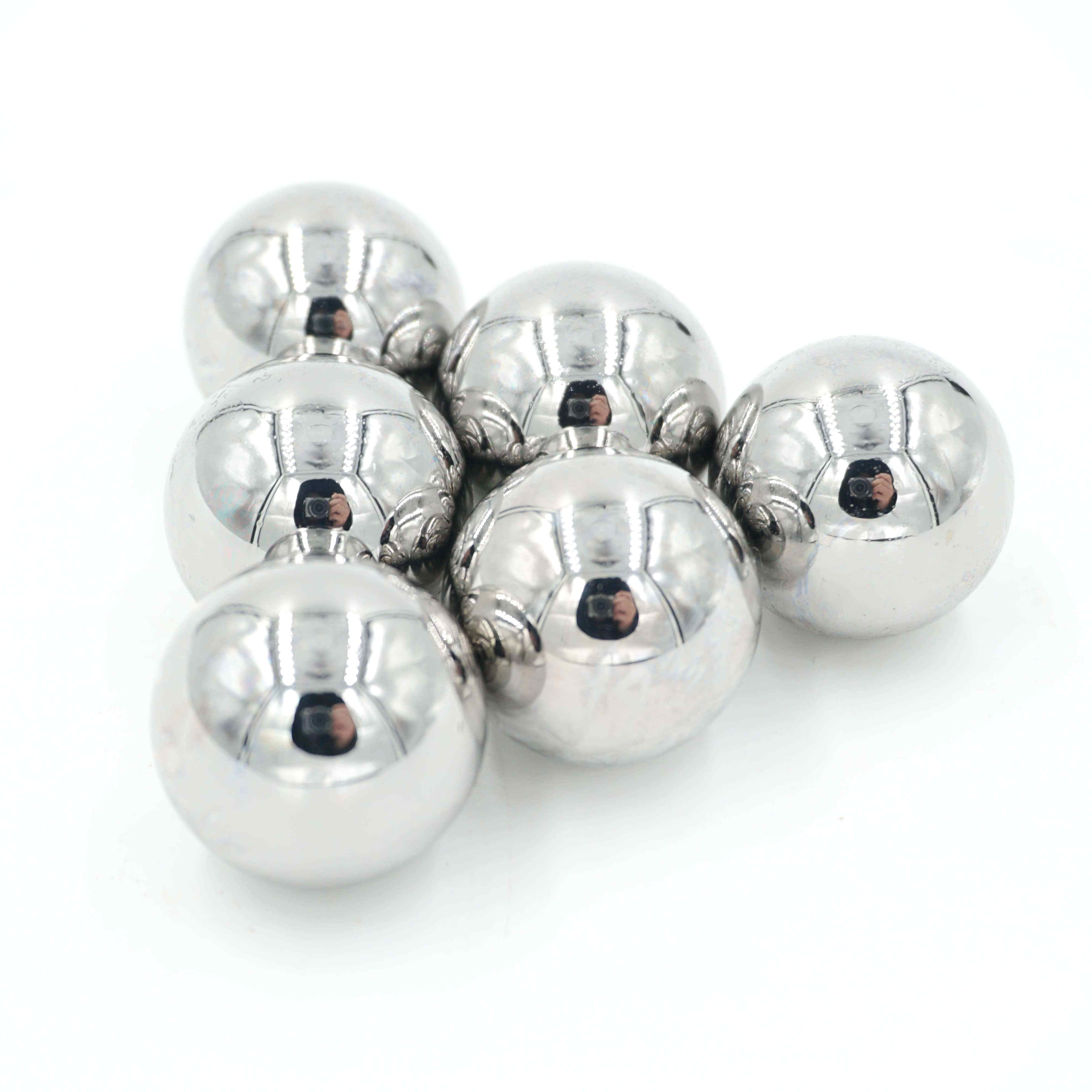
The workhorse product for this role is the Bearing Steel Ball - a through-hardened chrome alloy steel ball with a solid, through-hardened spherical body. It is produced in AISI 52100, with SUJ2 as an equivalent designation and 100Cr6 as the designation of the chrome alloy steel. Available in 0.5 mm to 50.8 mm (1/64" to 2") diameter, G10-G1000, HRC 60-66 and Ra ≤ 0.05 µm, it is used in ball bearings, automotive wheel hubs, electric motors, precision spindles and aerospace control systems.
The Chrome Steel Ball covers the same material family - AISI 52100 / DIN 100Cr6 / JIS SUJ2 - in 1 mm to 50.8 mm, G10-G1000 and HRC 60-66, with an isotropic finish available. It is specified for anti-friction bearings, automotive transmissions, precision instruments and valve train components, and it delivers a balance of high hardness, fatigue life and dimensional stability.
When the rolling role moves into a corrosive or high-precision environment, the material changes. The 440C Stainless Steel Ball is a martensitic stainless precision ball in AISI 440C / UNS S44004, supplied from 0.5 mm to 50.8 mm in G10-G1000 at HRC 58-62, with a maximum of 0.07% phosphorus and sulphur. It serves high-precision bearings, surgical and dental instruments, aerospace actuators, chemical pumps and watch movements. Where temperature is the constraint rather than corrosion, the M50 Steel Ball - AISI M50 / UNS T11350 to AMS 6490, typically 3 mm to 50 mm at HRC 62-66 - retains hardness and dimensional stability at elevated temperature and is used in aerospace engine main-shaft bearings and high-speed turbomachinery.
For the tightest rotating assemblies, the Precision Steel Ball covers 0.5 mm to 50.8 mm in grades G3, G5, G10, G16 and G25, in 52100, 100Cr6, 420C, 440C, 316 or 304 material, with sphericity controlled within micro-inches. It is applied in precision bearings, aerospace gyroscopes, metrology and measuring instruments, and high-speed spindles.
Role Two - The Sealing or Shut-Off Member Inside a Valve
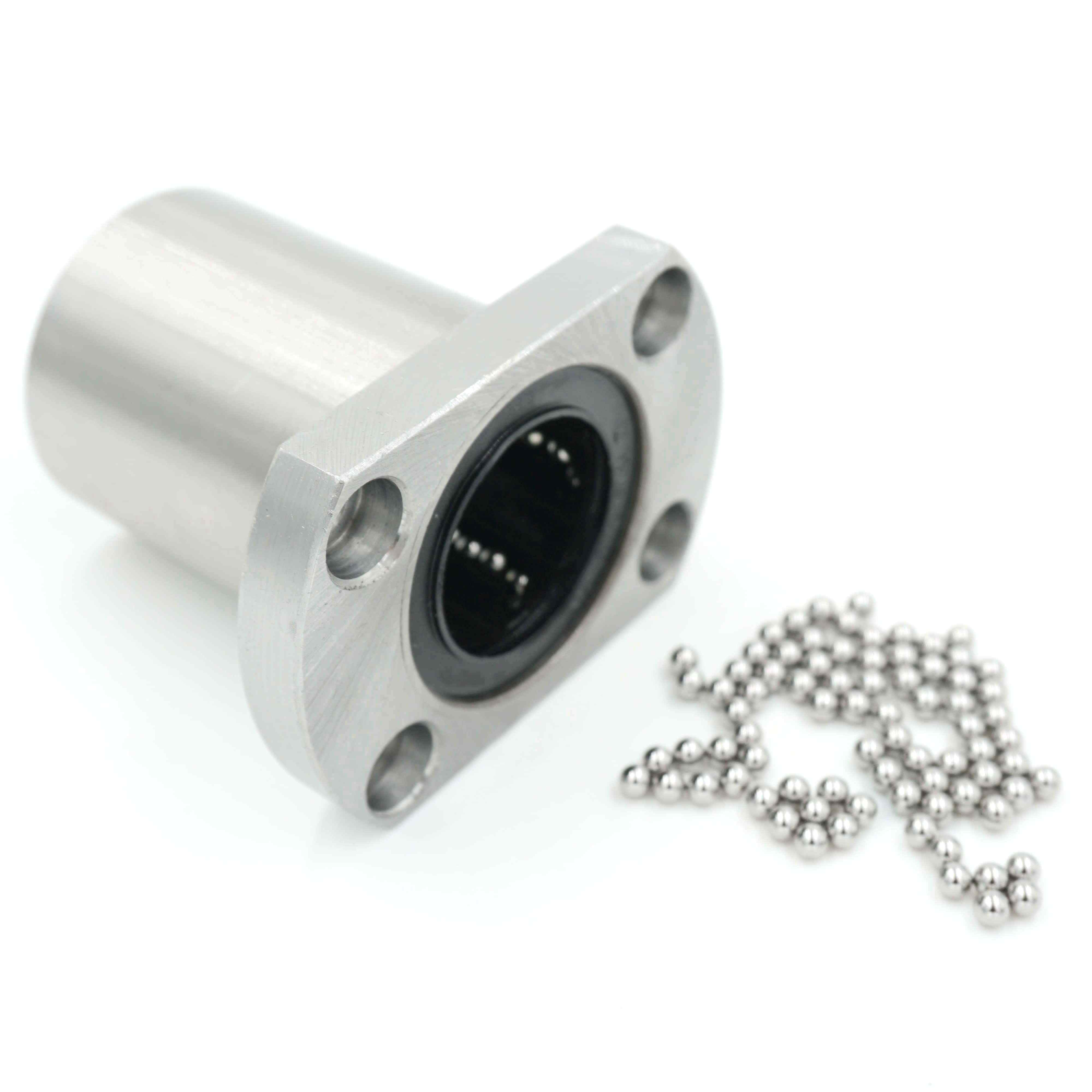
In a valve, the ball is not carrying rotating load. It is the closure. Valve and fluid-control service in oil, gas and petrochemical duty handles wet gas and mildly corrosive fluids at 0-200 °C and moderate pressure, with quarter-turn on/off and intermittent operation. The matched equipment is floating and trunnion-mounted ball valves, needle valves and check valves. The functional requirement is explicitly a sealing and shut-off element.
The primary specification for this role is hardened martensitic stainless in the HRC 48-55 band with moderate corrosion resistance and NACE MR0175 available as an option. Two standard products map onto it:
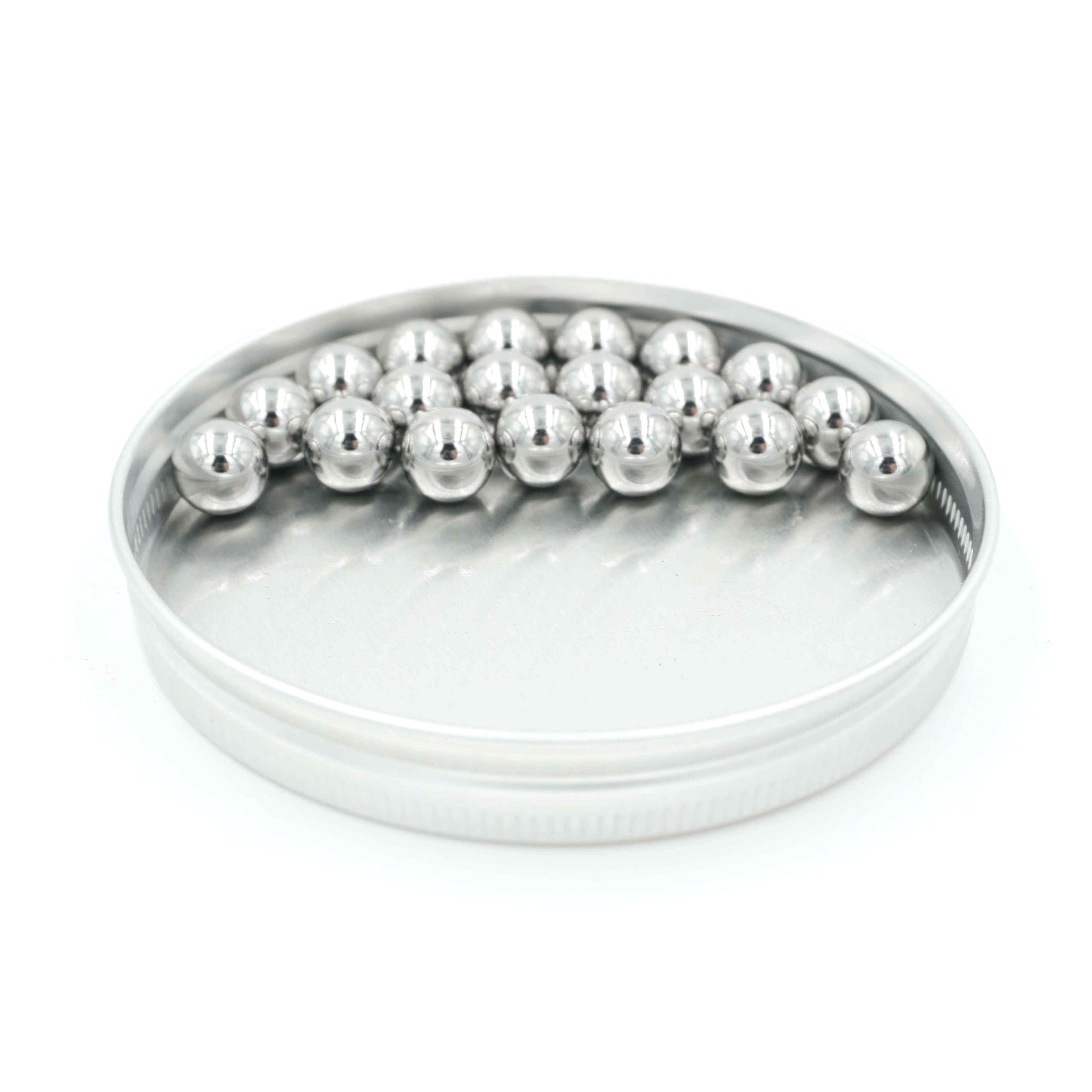
- 420C Stainless Steel Ball - martensitic stainless precision ball in AISI 420C / UNS S42000, 1 mm to 50.8 mm, G25-G1000, HRC 50-55, corrosion resistant. It is specified for bearings in mild corrosive environments, food-processing machinery, pump valves and marine hardware, including wash-down and humid-duty assemblies.
- 440C Stainless Steel Ball - the higher-hardness martensitic option at HRC 58-62, used where valve trim and pump components need a harder, more corrosion-resistant stainless surface than 420C provides.
Where the process medium becomes the dominant constraint, the material escalates. The 316 Stainless Steel Ball is an austenitic ball in AISI 316 / UNS S31600 with molybdenum alloying for pitting and crevice corrosion resistance in chloride and saltwater environments; because it is supplied annealed and soft, it is a corrosion-first choice rather than a load-bearing one, and it is used in marine hardware, chemical processing, saltwater valves, offshore rigging and pharmaceutical and food equipment. The Duplex Stainless Steel Ball in UNS S32205 / S31803 (2205), typically 10 mm to 100 mm, brings high strength plus chloride stress-corrosion and pitting resistance for offshore oil and gas, subsea manifolds, chemical processing, desalination and pulp and paper digesters. In severe acid service, the Hastelloy Steel Ball in Hastelloy C-276 / C-22, typically 3 mm to 50 mm, covers acid-handling valves, flue-gas desulfurization and pharmaceutical reactor duty.
Sealing-role balls are also frequently modified rather than supplied as plain spheres. The Drilled Steel Ball - through-drilled or tapped in AISI 52100, 304 or 440C, with stock sizes typically 6 mm to 50.8 mm - is used in speciality ball valves and diverter valves so media can pass through the ball itself, with drilled-hole concentricity and burr-free holes controlled to drawing. The Machined Steel Ball, produced from bar stock to near-net shape in diameters of 10 mm to 200 mm and above, serves large-diameter valve and flow-control trim beyond the range of cold heading.
Same Sphere, Different Material Expectations
Four variables separate the two roles in practice, and each one is visible in how the products are specified.
Hardness ceiling. The rolling role is defined by a narrow, high hardness band - HRC 60-66 for 52100 and chrome steel. The sealing role spreads across a lower and wider range: HRC 50-55 for 420C, HRC 58-62 for 440C, and an HRC 48-55 target band for general valve trim. The rolling role needs maximum fatigue resistance; the sealing role needs enough hardness to resist seating wear without sacrificing toughness or corrosion resistance.
Precision grade. Rolling elements are specified tightly - ABMA G10-G40 for industrial bearing duty, and G3-G25 for precision spindles and instrumentation - because grade directly influences noise, vibration and running accuracy. Sealing-role balls are commonly supplied across G25-G1000, since the seating geometry is set by the valve seat and actuation rather than by the ball's sphericity alone.
Corrosion exposure. A bearing ball inside an oil-lubricated housing is protected from the environment by its lubrication and housing. A valve ball is in direct contact with the medium by definition. That is why the sealing role is where austenitic 304 and 316, duplex 2205 and nickel-alloy Hastelloy enter the specification, while the rolling role defaults to 52100 and only moves to 440C or M50 when corrosion or temperature forces it.
Documentation and traceability. Automotive and EV powertrain bearing supply requires IATF 16949 traceability and consistent ball diameter. Valve trim for sour service calls for NACE MR0175 as an option. Both are documentation requirements, but they point at different risks - dimensional consistency and fatigue life on one side, material and corrosion qualification on the other.
Step-by-Step Breakdown: Specifying a Steel Ball by Function
The sequence below follows the decision order that separates the two roles before any material is named. It is the same order used when a mixed bearing-and-valve enquiry arrives.
Step 1 - Assign the function first. Decide whether the ball is a rolling element or a sealing and shut-off member. Everything downstream depends on this single answer, because the two roles do not share a hardness target or a corrosion rationale.
Step 2 - Identify the host equipment and duty. For rolling duty, confirm the bearing type - wheel hub, transmission, e-axle reduction gear, precision spindle - and the operating speed and lubrication. For sealing duty, confirm the valve type - floating ball, trunnion-mounted, needle or check - plus the medium, pressure and temperature.
Step 3 - Select the material family. Rolling duty starts with AISI 52100 / DIN 100Cr6 / JIS SUJ2. Move to 440C for corrosion-resistant precision bearings and to M50 for high-temperature, high-speed bearing service. Sealing duty starts with 420C for mild corrosive and washdown service, moves to 440C for higher hardness, and escalates to 316, duplex 2205 or Hastelloy C-276 as the medium becomes more aggressive.
Step 4 - Set the hardness target. HRC 60-66 for through-hardened chrome bearing balls. HRC 58-62 for 440C. HRC 50-55 for 420C. HRC 62-66 for M50. Record the heat-treatment condition on the material test report rather than treating hardness as a single number.
Step 5 - Fix the precision grade. G10-G40 for industrial bearing duty; G3-G25 for precision and instrumentation; G25-G1000 for general valve trim. Diameter range and grade should be quoted together, since both are reported by grade.
Step 6 - Decide whether the ball needs secondary features. A plain sphere covers most rolling and much sealing duty. Drilled, tapped, stepped, half-spherical or hollow configurations are needed when the ball must route media, mount directly into a linkage, or reduce mass. Hole diameter, depth, concentricity and thread class should be quoted from the drawing.
Step 7 - Confirm the documentation package. Bearing-role orders typically need material certificates, batch traceability and IATF 16949 records. Valve-role orders in sour service may need NACE MR0175. Both should be agreed before the order is placed, not after.
Step 8 - Confirm supply parameters. Standard sizes and common materials can usually ship from stock, while non-standard dimensions, special alloys and CNC features require dedicated tooling and a longer inspection cycle.
Use Cases: Where Each Role Shows Up
Electric-vehicle wheel-hub, transmission and e-axle bearings. High-RPM, oil-lubricated duty in the -20 °C to 150 °C band, with consistent ball diameter, fatigue life rating and IATF 16949 traceability as the governing requirements. This is the highest-volume rolling application in the automotive and EV powertrain segment.
Industrial deep-groove and angular-contact bearings. Continuous high-speed, grease-lubricated operation under heavy radial and axial load, where HRC 60-66, ABMA G10-G40 and low noise and vibration are the selection criteria.
Precision spindles, gyroscopes and metrology instruments. Ultra-tight sphericity, diameter variation and surface finish, served by G3-G25 precision balls in 52100, 100Cr6, 420C, 440C, 316 or 304.
Oil and gas ball valves, needle valves and check valves. Quarter-turn on/off service on wet gas and mildly corrosive fluids at 0-200 °C, normally specified in hardened martensitic stainless with optional NACE MR0175.
Sanitary and food-processing valves. Washdown and humid-duty assemblies in 420C, or 304 and 316 austenitic balls where general corrosion resistance and cleanability matter more than load capacity.
Offshore, subsea and desalination service. Duplex 2205 balls for chloride stress-corrosion and pitting resistance in subsea manifolds and desalination plants; Hastelloy C-276 for acid-handling and flue-gas desulfurization duty.
Speciality and diverter valves. Drilled and tapped balls that allow media to pass through the ball, with hole concentricity and burr-free finish controlled to drawing.
Comparison Table: Rolling-Role vs Sealing-Role Steel Balls
| Parameter | Rolling role (bearing) | Sealing / shut-off role (valve) |
|---|---|---|
| What the ball does | Rolling medium carrying load and reducing friction between rings | Sealing and shut-off element that opens or isolates the flow path |
| Typical host equipment | Wheel-hub bearings, transmission bearings, e-axle reduction gears, deep-groove and angular-contact bearings, precision spindles | Floating and trunnion-mounted ball valves, needle valves, check valves, diverter valves |
| Core material | AISI 52100 / SUJ2 / DIN 100Cr6 chrome steel; 440C for corrosion-resistant bearings; M50 for high-temperature bearings | AISI 420C / UNS S42000 and AISI 440C / UNS S44004 martensitic stainless; 316, duplex 2205 or Hastelloy C-276 for aggressive media |
| Hardness | HRC 60-66 (bearing and chrome steel); HRC 58-62 (440C); HRC 62-66 (M50) | HRC 50-55 (420C); HRC 58-62 (440C); general valve trim specified in the HRC 48-55 band |
| Precision grade | G10-G1000 for bearing steel balls; ABMA G10-G40 for industrial bearing duty; G3-G25 for precision balls | G25-G1000 for 420C; G10-G1000 for 440C |
| Diameter range | 0.5 mm - 50.8 mm (1/64" - 2"); M50 typically 3 mm - 50 mm | 1 mm - 50.8 mm (420C); 0.5 mm - 50.8 mm (440C); duplex 2205 typically 10 mm - 100 mm |
| Operating temperature in service | Approximately -20 °C to 150 °C in automotive and EV powertrain duty | 0 °C to 200 °C in valve and fluid-control service |
| Surface and documentation | Ra ≤ 0.05 µm for bearing steel balls; IATF 16949 traceability; consistent ball diameter | Burr-free seating and hole surfaces; NACE MR0175 available as an option for sour service |
| Referenced standard | ISO 3290-1:2014 (grades G3-G700); ASTM A295/A295M for 52100 bearing-quality steel; HS Code 8482.91 | Specified through valve service requirements and material standards such as NACE MR0175 where applicable |
Frequently Asked Questions
Which standards apply to steel balls used in rolling bearings?
ISO 3290-1:2014 specifies requirements for finished steel balls for rolling bearings and defines grades from G3 to G700. On the material side, ASTM A295/A295M covers the high-carbon, anti-friction bearing-quality steel used for bearing balls, including grade 52100. At the trade level, steel balls for bearings are classified under HS Code 8482.91, which covers balls, needles and rollers. These standards apply to the rolling role; sealing-role balls are generally specified through the valve's own material and service requirements, such as NACE MR0175 for sour service, rather than through a standalone ball standard.
Can you supply hardened bearing balls such as 52100, 440C or M50, and what hardness can you reach?
Yes. Chrome steel 52100 bearing balls are through-hardened to HRC 60-66. 440C martensitic stainless precision balls are supplied at HRC 58-62. M50 high-speed alloy balls are supplied at HRC 62-66 with high-temperature stability, to AMS 6490 material specification. Hardness and heat-treatment condition are controlled by batch and reported on the material test report, so the hardness figure should always be read together with the material grade and the heat-treatment record rather than as a standalone number.
Can you make non-standard, drilled, threaded or hollow steel balls to drawing?
Yes. Production covers non-standard diameters to decimal size, drilled through or blind holes, threaded balls in metric and UNC/UNF thread classes, stepped and half-spherical geometries, and hollow balls, with features controlled for diameter, depth, concentricity and thread class. Tolerance and concentricity are quoted per drawing. Soft materials are easier to machine, while hardened 440C or M50 require specialised tooling and a longer lead time. Drilled steel balls are typically supplied in stock sizes from 6 mm to 50.8 mm and are used in locking ball joints, tie-rod ends, linkage pivots, positioning fixtures and speciality ball valves.
What is your MOQ, and can I order small quantities or samples?
Standard catalogue sizes have a low minimum order quantity and can be ordered by the bag or piece, with samples available. Non-standard and CNC-machined balls usually start from 50-500 pieces depending on setup, and prototype quantities of 10-50 pieces are workable for simple parts. MOQ is flexible for first-time cooperation and NDA projects, and prototype or first-article samples can be supplied before mass production approval.
What is your lead time, and can you supply steadily?
Standard sizes and common materials are often held in stock and can ship in 5-10 days. Standard production runs take 15-30 days, while non-standard sizes, special alloys or CNC features take 20-60 days depending on tooling and inspection. Rolling stock and backup tooling are maintained for stable repeat supply, with monthly production status updates. Buyers comparing a rolling-role and a sealing-role requirement can send both specifications together to Haimen City Mingzhu Steel Ball Co., Ltd. for a single consolidated quotation, or contact Diego Gu at info@hmmzsteelball.com for a technical review of grade and material selection.
Conclusion: Name the Function Before Naming the Grade
Steel balls do two jobs in industrial equipment, and the specification follows the job. As a rolling element, the ball is judged on fatigue life, through-hardness in the HRC 60-66 band, dimensional stability and precision grade - which is why AISI 52100, DIN 100Cr6 and JIS SUJ2 chrome steel remain the default, with 440C and M50 taking over where corrosion or high temperature intervene. As a sealing or shut-off member, the ball is judged on seating wear and resistance to the process medium - which is why martensitic stainless grades such as 420C at HRC 50-55 and 440C at HRC 58-62 carry the mainstream valve duty, with 316, duplex 2205 and Hastelloy C-276 escalating as the fluid becomes more aggressive.
The practical rule is simple. Name the function before naming the grade, confirm the medium and the temperature, then match material, hardness and precision grade to that role. Buyers who apply a bearing specification to a valve, or a valve material to a bearing, will usually find the error at the first inspection or the first service failure.
Mingzhu manufactures across both roles - bearing steel balls, chrome steel balls, stainless steel balls, carbon steel balls, precision balls, plus custom machined, drilled, hollow and non-standard configurations - from a 7,500 m² facility in Haimen, Jiangsu Province, with IATF 16949:2016 certification and an annual capacity of 2,500 tons.
Next step: send your function, medium and size
Tell us whether the ball is a rolling element or a sealing member, the material or medium it will contact, and the diameter and grade you need. We will confirm the grade, hardness and lead time, and can supply samples or first-article parts before mass production approval.
Email: info@hmmzsteelball.com | Tel / WhatsApp: +86 13912237934 | Web: www.hmmzsteelball.com
Download the full product range and specification reference: Haimen Mingzhu Steel Ball Brochure (PDF)
Have Questions or Need More Details?
Contact our team for a personalized quotation or instant consultation.
Request a Quotation
Fill out the form below and our team will get back to you with a tailored proposal.
WhatsApp Direct Chat
Prefer to chat in real-time? Message us on WhatsApp for instant assistance & quick answers.
- Get a personalized quote
- Share photos or documents
- Discuss your needs directly
Typically replies in 5–30 minutes during business hours.