
Repeat Steel Ball Orders: A Long-Term Partnership FAQ on Payment, Shipping and Acceptance
A repeat steel ball order is decided before the purchase order is written. Payment structure, incoterms, packaging marks, acceptance documents and the drawing revision that governs a custom feature all carry forward from the first contract to every batch that follows, and any one of them can turn a stable supply line into a dispute when it is left implicit.
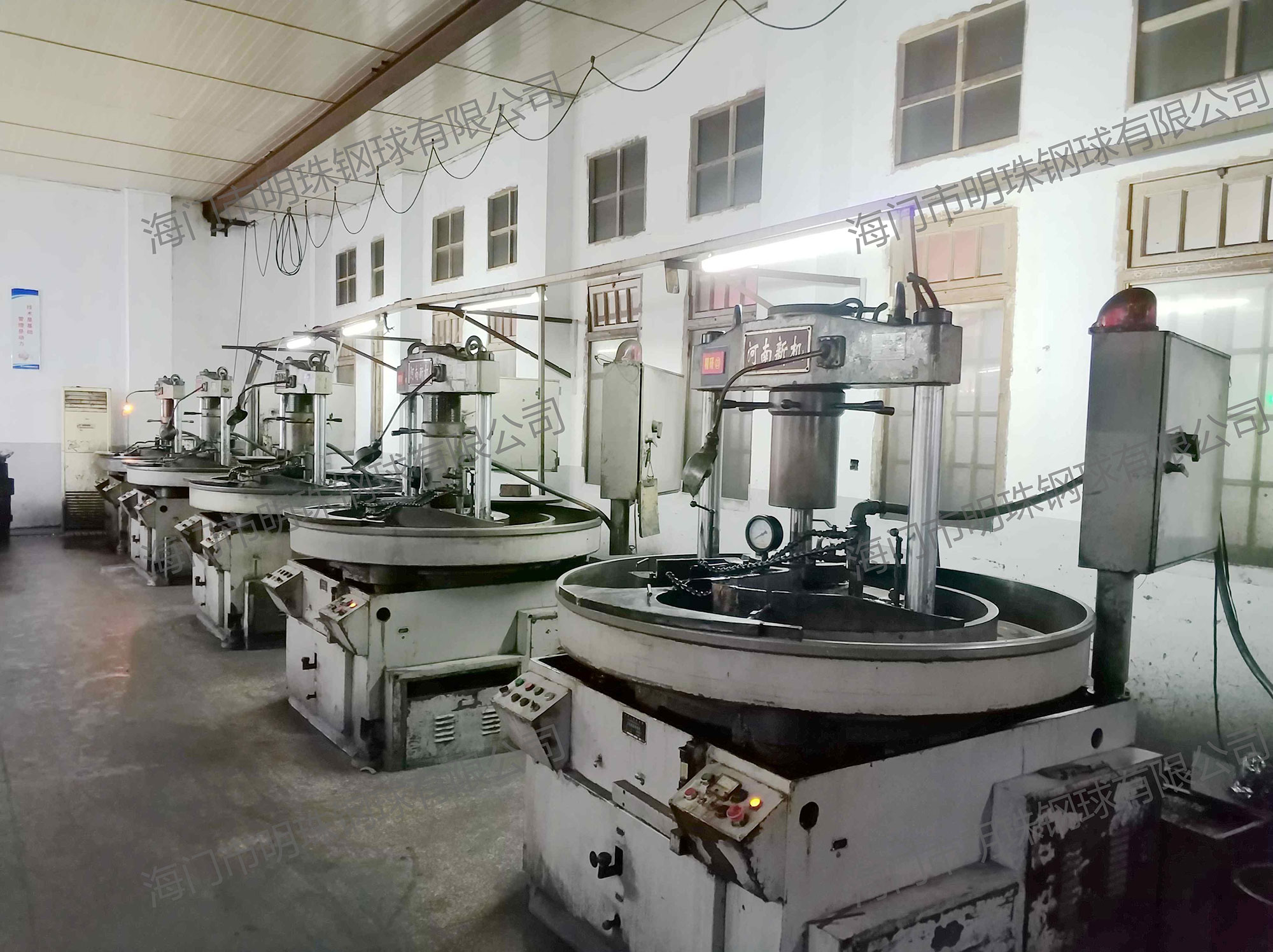
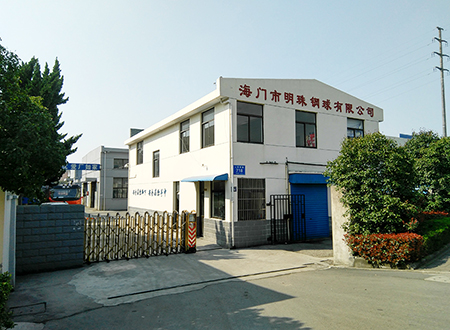
This FAQ answers the commercial and continuity questions procurement teams raise before committing to repeat supply: payment terms, shipping and delivery options, purchasing terms, acceptance criteria, and how custom, non-standard, drilled, hollow and machined balls are handled from one order to the next. The reference manufacturer is Haimen City Mingzhu Steel Ball Co., Ltd., a steel ball producer founded in 1992 in Haimen, Jiangsu Province, China, operating an IATF 16949:2016 quality management system across bearing, chrome, stainless, duplex, carbon, Hastelloy and machined ball types. The terms below are the company's stated standard positions; the binding version for any programme is the one confirmed in that programme's supply agreement.
Why repeat orders drift after the first delivery
A first order is usually watched closely: samples are approved, drawings are exchanged, and receiving inspection opens every carton. The second and third orders are where supply programmes lose consistency, and the cause is rarely a machining defect. Three patterns account for most of the friction.
- Specification drift. A line item reading "440C stainless steel balls, 10 mm" fixes material and diameter and leaves hardness range, precision grade and inspection level open. The next batch can meet the PO and still differ from the approved sample.
- Acceptance ambiguity. If the purchase order says "inspection to supplier standard" while the buyer inspects to its own sampling plan, both parties can be correct and still disagree at goods-in.
- Commercial and logistics drift. Packaging moves from sealed bags to bulk drums, lot marking disappears from the carton, the incoterm shifts from FOB to DAP, or a custom part is reordered against a revised drawing nobody re-approved.
None of these is a manufacturing problem; they are contract-writing problems. A steel ball supply programme stays stable when material designation, precision grade, hardness range, drawing revision, acceptance document set, packaging format and lead-time band are defined once and referenced thereafter.
How steel ball supply is normally specified
Three external references do most of the work in a steel ball specification, and each removes one area of argument.
Precision grade. ISO 3290-1:2014 specifies requirements for finished steel balls for rolling bearings and defines the grade series, from G3 to G700, that buyers and suppliers quote when they discuss precision. A purchase order naming the grade and the standard is measurable; "high precision" is not.
Bearing material. ASTM A295/A295M covers the high-carbon, anti-friction bearing steel behind the 52100 designation widely used for chrome steel balls, so the material call-out can reference a published specification instead of an internal one.
Customs classification. Steel balls for bearings fall under HS code 8482.91 (balls, needles and rollers), which is the classification the commercial invoice and packing list should carry when the shipment is cleared.
Quality management. For automotive programmes, the certificate layer sits on top: Haimen City Mingzhu Steel Ball Co., Ltd. holds IATF 16949:2016 certification, which supports the batch traceability and document discipline automotive customers normally expect from an approved supplier. The certificate documents the system; it does not by itself fix grade, hardness or inspection level, which remain order-specific.
What a long-term steel ball supply agreement should fix
Before a second order is placed, seven items should already be in writing, because each one is cheaper to agree now than to argue about later:
- Material designation in both common and standard form: chrome steel 52100 / 100Cr6 / SUJ2, 440C martensitic stainless, 316L austenitic, duplex UNS S31803/S32205, Hastelloy C-276 / N10276.
- Precision grade and measurement basis per ABMA/ISO 3290, for example G10–G25 for tolerance-critical assemblies or G100 and coarser for general industrial duty.
- Hardness range and heat-treatment condition, recorded on the material test report rather than quoted verbally.
- The controlled drawing revision for any drilled, threaded, stepped, hollow or otherwise machined feature.
- The acceptance document set: MTR (EN 10204 2.1 or 3.1), COA, dimensional and roundness report, plus PPAP, FAI, NACE MR0175 or AMS documentation where the application requires it.
- Packaging format and marking: drums, sealed bags, tubes or blisters, and cartons marked with quantity, grade and lot code so receiving inspection can match a shipment to its batch record.
- Commercial terms: payment method, incoterm, named port, and how drawing, material or quantity changes are notified before production.
Payment terms and purchasing terms for repeat supply
The standard payment structure is T/T with a 30% deposit and 70% balance before shipment. L/C at sight is used for large orders, PayPal or Western Union for sample fees, and open account (OA) or Net-30 terms are negotiable for approved repeat buyers. The first three are routine; the fourth has to be earned through order history and is written into a supply agreement rather than assumed from repeat order frequency.
Stated standard terms. Payment: T/T 30% deposit + 70% before shipment; L/C at sight for large orders; PayPal or Western Union for sample fees; OA/Net-30 negotiable for qualified repeat buyers.
Incoterms: EXW; FOB Shanghai or Ningbo; CIF; DAP; DDP, by air or sea.
Packaging: drums, sealed bags, tubes or blisters, OEM-labelled cartons, marked with quantity, grade and lot code.
Minimum order quantity is set by order type rather than by a single company-wide figure. Standard catalog sizes can be ordered by the bag or piece with samples available. Non-standard, CNC-machined, drilled and threaded parts typically start from 50 pcs; precision grades, hollow, electroplated and duplex items from 100 pcs; M50 high-speed grades from 500 pcs; and Hastelloy C-276 from 5000 pcs, depending on size and quantity. Prototype quantities of 10–50 pcs are workable for simple parts, and MOQ is negotiable for first-time cooperation and NDA projects.
For budgeting, the purchasing terms that matter most on repeat supply are not the unit price alone but which items are fixed and which float: material grade is fixed by the drawing, hardness by the heat-treatment specification, and inspection level by the acceptance list. When those three are locked, price comparisons between orders stay meaningful.
Shipping, incoterms and packaging
EXW and FOB Shanghai or Ningbo are the standard shipping terms; CIF, DAP and DDP are available, by air or by sea depending on urgency and volume. Export shipments account for roughly 25% of output at the company's 7,500 m² Haimen facility, with the United States, Germany and Brazil among the main markets, so both air-freighted sample quantities and sea-freighted production volumes are handled under the same terms.
The incoterm choice changes who carries which obligation and should be decided against the buyer's own customs setup rather than by habit. Under DAP the buyer handles import clearance and duty; under DDP the seller does. DDP simplifies landed-cost calculation but transfers customs responsibility to the supplier, which is why it is quoted per destination rather than assumed.
Packaging is part of the specification, not an afterthought. Balls are supplied in drums, sealed bags, tubes or blisters and OEM-labelled cartons, with quantity, grade and lot code marked on the packaging. The lot code is the practical link between a carton in the buyer's warehouse and the material test report issued with that shipment, so any change to packing format should be agreed with the same seriousness as a change to material.
Lead time and MOQ by order type
The ranges below are the stated typical figures for each order type. They move with drawing complexity, material, quantity and inspection level, and they are quoted per order rather than guaranteed by this page.
| Order type | Typical MOQ | Typical lead time | Acceptance focus |
|---|---|---|---|
| Standard catalog sizes (carbon, chrome, 304/316 stainless) | from 100 pcs | 5–10 days for stock sizes; 15–30 days standard production | Dimensional and roundness check; MTR EN 10204 2.1/3.1; PMI on request |
| Bulk standard sizes, heat-treated or plated | from 100 pcs | 7–20 days for stock; 20–40 days when heat-treated or plated to order | Hardness, dimensional and roundness check; visual sorting; MTR/COA on request |
| Precision grades (G10–G25) | from 100 pcs | 10–30 days standard precision; 25–50 days for G3/G5 | 100% machine-vision plus roundness and dimension per ABMA/ISO; grade report |
| Hollow | from 100 pcs | 15–40 days by size, wall thickness and process | Wall thickness and roundness; leak/pressure test when specified |
| Electroplated | from 100 pcs | 10–30 days standard plating; 20–40 days custom coating | Plating thickness; adhesion and salt-spray on request |
| Duplex stainless | from 100 pcs | 15–40 days standard; 30–55 days with special heat treatment | PREn and phase check; hardness; chloride pitting test on request |
| Non-standard to drawing | from 50 pcs | 20–50 days by drawing, material and quantity | Per drawing; dimensions, roundness, heat treatment and surface as agreed |
| CNC machined | from 50 pcs | 15–40 days by drawing complexity and material | Drawing dimensions; CMM report; surface roughness |
| Drilled or threaded | from 50 pcs | 15–40 days by hole/thread specification and material | Hole position, size and thread per drawing; CMM report |
| M50 high-speed / aerospace | from 500 pcs | 20–50 days including heat treatment and inspection | HRC, high-temperature and dimensional checks; AMS 6490, PMI, 100% inspection |
| Hastelloy C-276 | from 5000 pcs | 25–55 days including heat treatment and inspection | PMI; hardness, dimension and roundness; MTR EN 10204 3.1 (N10276/C-276) |
Two readings of this table are worth planning around. First, lead time is driven less by ball size than by the number of added process steps: heat treatment, plating, drilling and material verification each add a queue of their own. Second, MOQ rises with material scarcity rather than geometry, which is why a hollow 30 mm shell ball and a solid Hastelloy ball of the same diameter sit at very different order minimums.
Acceptance criteria: checks a supplier can be held to
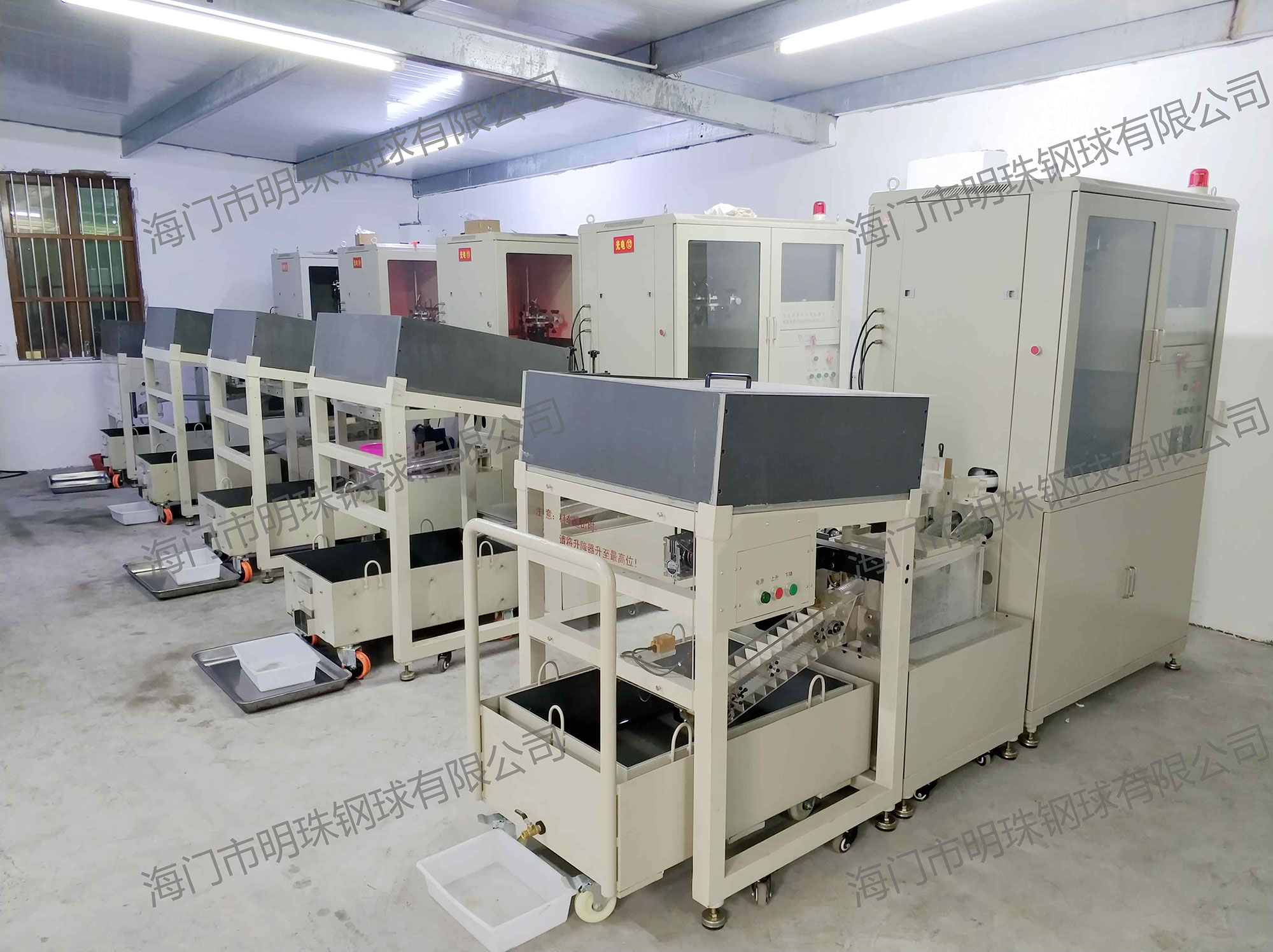
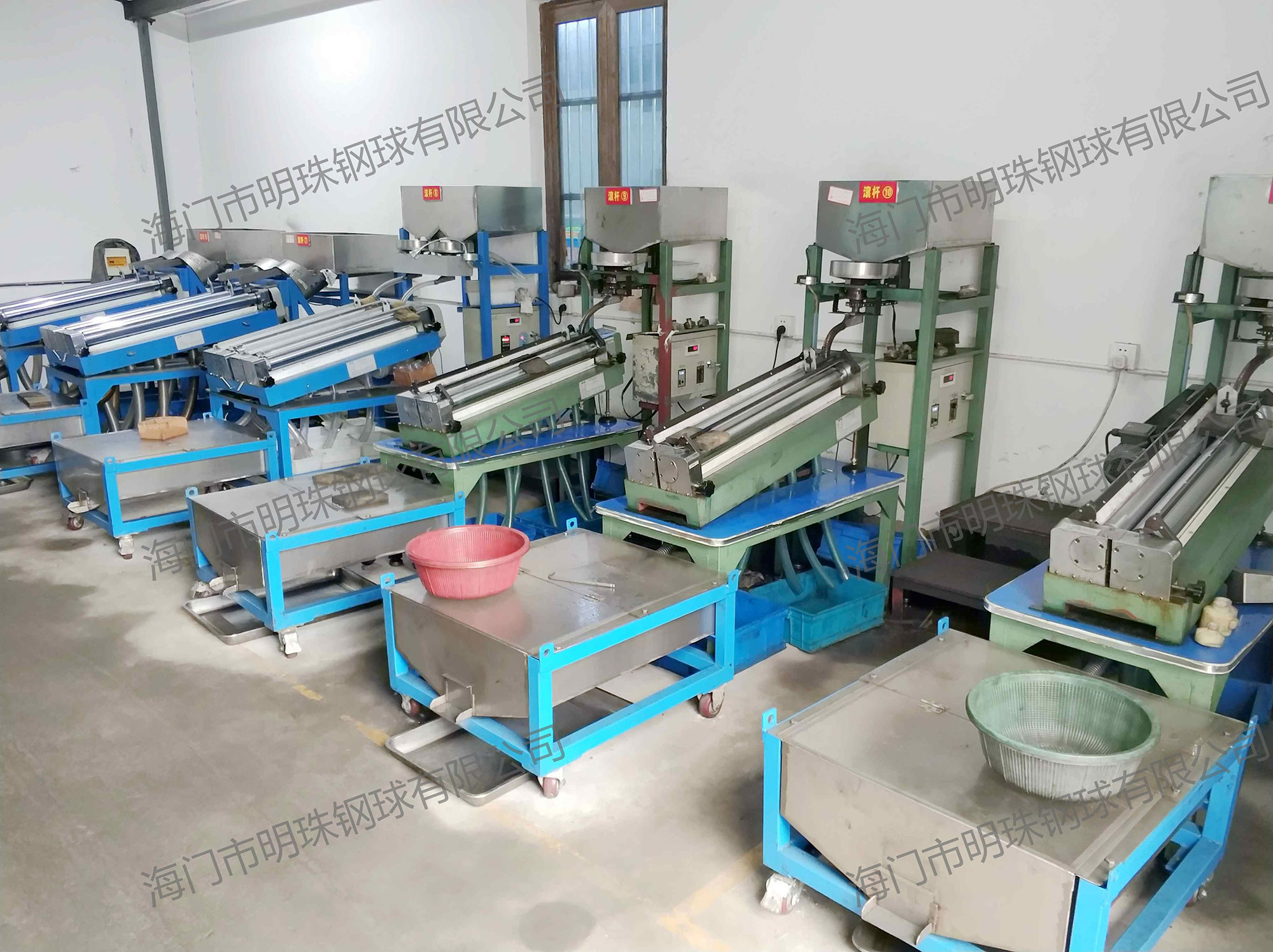
Acceptance criteria should be written as a list of measurable checks, not as a statement that goods must be of good quality. The company's inspection chain covers raw-material sampling before production, in-process checks, and 100% automated screening of finished balls by roller bar sorting and photoelectric surface-defect detection before dispatch.
Material verification
Positive material identification (PMI) or chemical analysis confirms that the delivered balls match the called-out grade, and it is the check that catches a substitution between similar stainless grades. For Hastelloy C-276 orders the material certificate is issued to EN 10204 3.1 against N10276/C-276.
Dimension and roundness
Diameter, diameter variation and roundness are verified against the ordered ABMA/ISO 3290 grade and reported by grade. For hollow balls, wall thickness and roundness are checked, with a leak or pressure test added when the drawing specifies one.
Hardness
Hardness confirmation belongs in the acceptance list whenever the material is hardenable: chrome steel 52100 is through-hardened to approximately HRC 60–66, 440C martensitic stainless to HRC 58–65, and M50 to HRC 62–66 with high-temperature stability. Hardness, heat-treatment condition and microstructure are controlled by batch and reported on the material test report.
Surface condition
Appearance and surface defects are screened by automated machine-vision sorting for size, roundness, surface defects and appearance, supplemented by roughness and microstructure checks. For plated balls, plating thickness is verified by cross-section or microscopy, with adhesion and salt-spray reports available on request.
Documents
A complete acceptance file normally contains the material test report (MTR EN 10204 2.1 or 3.1), a certificate of analysis, a dimensional and roundness report, and, where the application requires it, PPAP, FAI, NACE MR0175 or AMS documentation. Salt-spray and adhesion reports are available on request for plated and passivated items.
Custom, non-standard, drilled, hollow and machined balls across repeat orders
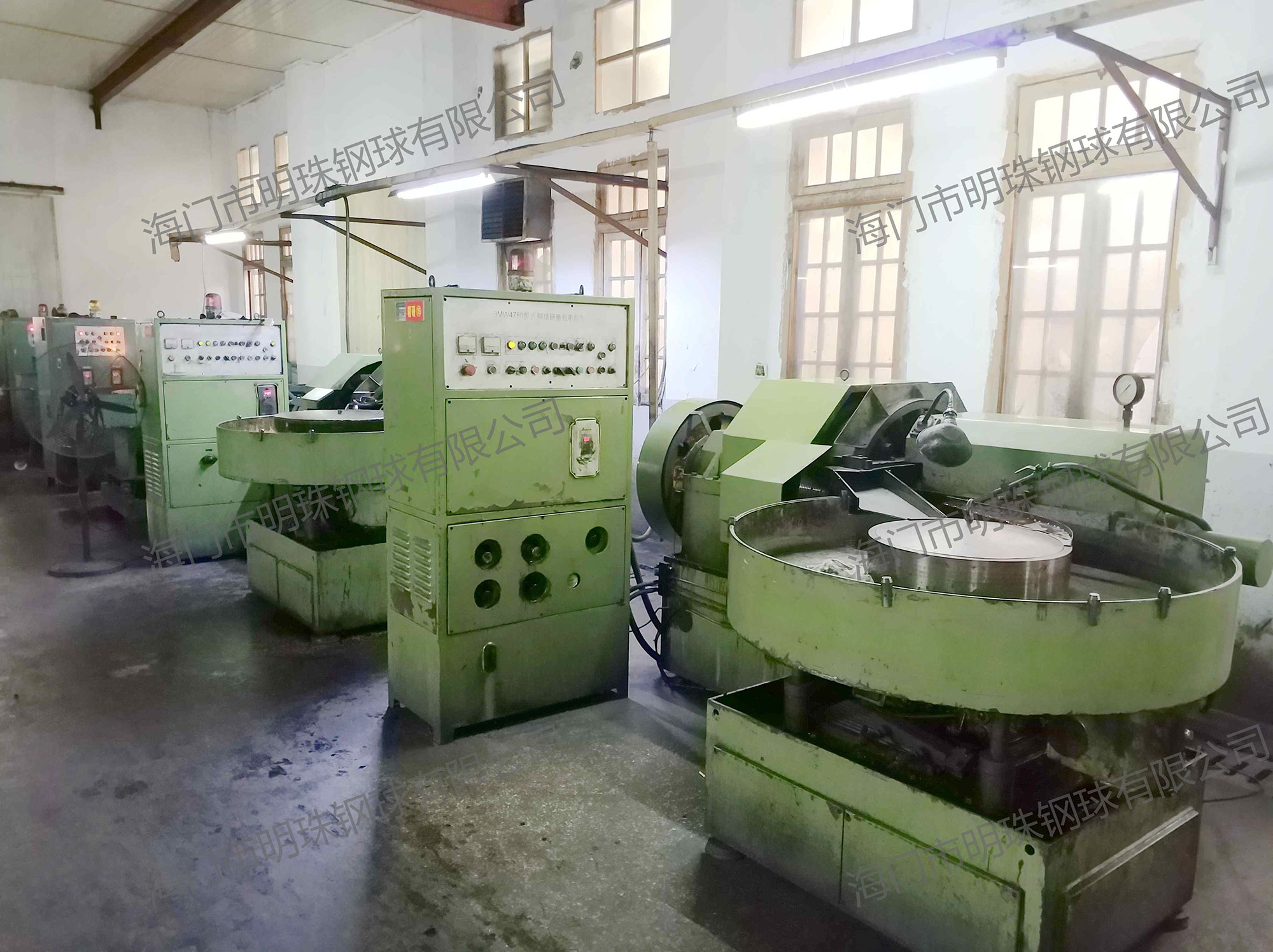
Custom geometry is produced to drawing rather than selected from a catalog, and the commercial consequences of that difference should be understood before the second order. The company produces non-standard diameters to decimal size, drilled (through or blind), threaded (metric and UNC/UNF), stepped, half-spherical and hollow balls, with features controlled for diameter, depth, concentricity and thread class. Hole location tolerance is typically held to the drawing, for example ±0.05 mm or better where specified.
The cost and timing profile differs from standard supply. For repeat procurement, standard inch or metric balls use fixed tooling with low MOQ and short lead times, while non-standard balls add custom size, drilling or threading, exotic alloy, special heat treatment or inspection; that typically means +10–30% for simple custom work, more where CNC features or exotic alloys are involved, with lead times in the 15–60+ day range depending on tooling, material and documentation.
Machinability also moves with material. Soft materials are easier to machine; hardened 440C and M50 require specialized tooling and longer lead times, which should be reflected in the delivery band written into the agreement.
Three practices keep a custom part stable across repeat orders: freeze the drawing revision and reference it on every PO; re-approve the first article whenever the drawing, material or process changes; and keep the approved sample and its inspection report on file at both ends so a later dispute is settled against a physical reference rather than a memory.
Keeping material and grade choices consistent between batches
Long-term supply is mostly a material-consistency exercise. The common families behave differently enough that a substitution made to save cost or lead time changes the application outcome, so the grade should be named in the same standard notation on every order.
- Chrome and bearing steel (52100 / 100Cr6 / SUJ2). Highest hardness and rolling-fatigue life at approximately HRC 60–66, but it needs rust-preventive lubrication in service. The default for clean, well-protected bearing duty.
- 440C martensitic stainless. HRC 58–65 with corrosion resistance, used where wet, washdown or mildly corrosive conditions would attack 52100.
- 420C martensitic stainless. HRC approximately 48–55: hardenable and moderately corrosion resistant, a wear-part choice where 440C hardness is unnecessary.
- 304 versus 316 austenitic stainless. Both are soft, non-hardenable corrosion grades. 316 adds 2–3% molybdenum and 10–14% nickel, raising PREN to roughly 23–28 against 18–20 for 304, which is why 316 is the choice for seawater, chloride, CIP and chemical service.
- Duplex stainless (UNS S31803/S32205). Roughly double the yield strength of 316 and a PREn around 34–38 versus 24–26, at higher alloy and processing cost; it needs controlled heat treatment to avoid embrittlement.
- Carbon steel. HRC approximately 50–58, materially cheaper, suitable for light-load, non-critical and decorative duty rather than cyclic bearing load.
- Hastelloy C-276 (N10276). Nickel-molybdenum-chromium superalloy with 15–17% Mo and 3–4.5% W, PREN around 69, at roughly 5–12 times the material cost of 316. Reserved for strong reducing acids, high-chloride and aggressive chemical service, with PMI and passivation as routine acceptance steps.
After-sales: resolving a batch issue without renegotiating the contract
An issue is resolved fastest when it can be tied to a batch record. Every shipment leaves with MTR/COA documentation, packaging carries the lot code, and the inspection chain runs from raw-material sampling through in-process checks to final inspection and 100% screening before dispatch. That chain is what makes a claim specific: lot code, shipment documents, agreed specification, measured deviation.
- Quarantine the lot and record the code. Hold the remaining quantity and note the lot code from the carton marking.
- Name the specification line that was missed — grade, hardness range, diameter or roundness, hole position, thread class or plating thickness.
- State the measurement method used to reach the finding: micrometer, roundness tester, CMM, hardness tester or plating cross-section.
- Attach the documents received with the shipment — MTR, COA, dimensional report — so the two records can be compared line by line.
- Request the batch inspection record, including PMI confirmation where material grade is in question.
- Agree the remedy in writing under the supply agreement that governs the order.
One boundary is worth stating plainly: replacement, credit, sorting cost and freight responsibility are commercial remedies defined in that agreement. What a supplier page can verify is the documentation trail any remedy depends on; the remedy itself belongs in the contract, which is why the document set should be agreed before the first repeat order rather than after the first complaint.
Frequently asked questions
What documents ship with each order, and how is batch traceability maintained?
Each shipment is accompanied by MTR/COA documentation, with MTR EN 10204 2.1 or 3.1 available depending on grade and requirement, plus a dimensional and roundness report. For Hastelloy C-276 the certificate is issued to EN 10204 3.1 against N10276/C-276; for M50 orders, MTR with AMS 6490 traceability and PMI. PPAP, FAI, NACE MR0175, salt-spray and adhesion reports are issued on request. Traceability is anchored by the lot code marked on the packaging, which links the physical carton to the material and inspection records for that batch.
Can non-standard, drilled, threaded or hollow balls be made to drawing, and does that specification carry over to repeat orders?
Yes. Non-standard decimal diameters, drilled (through or blind), threaded (metric and UNC/UNF), stepped, half-spherical and hollow balls are produced to drawing, with diameter, depth, concentricity and thread class controlled to the drawing tolerance; hole location is typically held to ±0.05 mm or better where specified. Acceptance follows the customer drawing or specification, with MTR and inspection reports issued against it. For repeats, the drawing revision is the controlling document, and any change to drawing, material or process should trigger a fresh first-article approval rather than an assumption that the earlier approval still applies.
What payment terms and purchasing terms apply to repeat orders?
Standard payment is T/T 30% deposit with 70% balance before shipment. L/C at sight is used for large orders, PayPal or Western Union for sample fees, and OA or Net-30 terms are negotiable for qualified repeat buyers under a supply agreement. Delivery runs on EXW, FOB Shanghai or Ningbo, CIF, DAP or DDP, by air or sea. MOQ is set per order type, from 100 pcs for many standard, precision, hollow, electroplated and duplex items and 50 pcs for non-standard, machined and drilled parts, up to 500 pcs for M50 and 5000 pcs for Hastelloy C-276. Payment terms, incoterm and MOQ are confirmed per order, not assumed from the previous one.
What are the MOQ and sample arrangements before committing to a long-term order?
Standard catalog sizes have low MOQ and can be ordered by the bag or piece, with samples available; sample fees can be paid by PayPal or Western Union. Non-standard and CNC-machined balls usually start from 50 pcs depending on setup, and prototype quantities of 10–50 pcs are workable for simple parts. MOQ is flexible for first-time cooperation and NDA projects, and the approved sample plus its inspection report becomes the reference for later production batches.
What lead time applies, and can supply stay steady across a year?
Stock sizes often ship in 5–10 days and standard production typically runs 15–30 days, while non-standard sizes, special alloys or CNC features take 20–60 days depending on tooling and inspection. Order-type ranges are narrower in practice: precision grades 10–30 days (25–50 for G3/G5), machined and drilled parts 15–40 days, duplex 15–40 days and up to 30–55 with special heat treatment, M50 20–50 days and Hastelloy C-276 25–55 days. Steady repeat supply is supported by rolling stock, backup tooling and monthly production status updates, and the 2,500-ton annual output and 105 sets of processing equipment at the 7,500 m² Haimen facility set the capacity context for annual volumes.
How should an issue be raised if a delivered batch fails acceptance?
Quarantine the lot, record the lot code from the packaging, and state the specific specification line that was missed together with the measurement method used. Attach the MTR, COA and dimensional report received with the shipment, and request the batch inspection record, including PMI confirmation where material grade is in question. The company's inspection chain runs from raw-material sampling through in-process checks to 100% automated screening before dispatch, so a claim that cites a lot code and a measured deviation can be checked against records rather than debated. The applicable remedy is the one defined in the governing supply agreement.
How do we set up a long-term supply arrangement with batch traceability and annual contract terms?
Start from the specification, not the price: confirm material designation, ABMA/ISO 3290 grade, hardness range, drawing revision, acceptance document set, packaging and lot marking, then agree payment terms, incoterm and a lead-time band per order type. Batch traceability follows from the lot code plus the MTR/COA and inspection reports issued with each shipment, and IATF 16949:2016 certification supports the document discipline automotive programmes require. Annual volumes, OA terms and stocking arrangements are then negotiated against actual order history rather than assumed. A practical next step is to send the drawing and annual quantity for a quoted repeat-supply package, or to review the company brochure before that discussion.
What a stable steel ball programme looks like
Long-term steel ball supply is less about finding a supplier who can make one good batch than about fixing the terms that make batch twenty match batch one. In practice that means a named material standard, a stated precision grade, a controlled drawing revision, an acceptance list with documents attached to each shipment, a packaging format that carries the lot code, and commercial terms written into an agreement instead of inferred from habit.
Payment, shipping and acceptance are the three places where repeat programmes are won or lost, and all three are settled on paper before production starts. Custom, drilled, hollow and machined parts add drawing control and longer lead times to that picture, but they do not change the underlying logic: specify once, verify every batch, and keep the record that lets both sides check the same facts.
For procurement teams assembling a repeat-supply package, the Haimen Mingzhu company brochure (PDF) summarises the product range, and a drawing plus annual quantity is enough to request a quoted supply proposal with the acceptance documents that would apply.
Have Questions or Need More Details?
Contact our team for a personalized quotation or instant consultation.
Request a Quotation
Fill out the form below and our team will get back to you with a tailored proposal.
WhatsApp Direct Chat
Prefer to chat in real-time? Message us on WhatsApp for instant assistance & quick answers.
- Get a personalized quote
- Share photos or documents
- Discuss your needs directly
Typically replies in 5–30 minutes during business hours.