
Electroplated Steel Balls: Substrate, Plating and Grade Parameters for Valve Service
Specifying an electroplated steel ball for valve service requires four separate decisions: the substrate, the plating system, the ball grade and sphericity, and the hardness and diameter tolerance. A request for electroplated steel balls does not define any of them. For a mildly corrosive fluid, a valve trim or seating application and a 0–200°C service window, the buyer should write a specification that separates the bulk material from the surface coating and the sealing geometry from the manufacturing grade.
Electroplated steel balls from Haimen City Mingzhu Steel Ball Co., Ltd. are custom products with zinc, nickel, chrome or copper plating on a carbon or alloy steel base. The supplied data covers plating type and thickness, base material, salt-spray requirements, coating-thickness checks, adhesion and salt-spray reports on request, and dimensional inspection. It does not provide a universal chemical or temperature rating for every plated ball. That distinction is the starting point for a defensible valve specification.
What Makes an Electroplated Ball Different from a Stainless or Chrome Ball?
An electroplated ball is a composite: a steel core plus a thin surface layer. The core supplies hardness, strength and geometry; the plating supplies the intended surface condition. The two must be specified together. A plating name alone does not define corrosion performance, wear performance or suitability for a valve seat.
Stainless steel balls such as 304, 316, 420C and 440C obtain their corrosion resistance from the bulk alloy. Chrome steel balls such as AISI 52100 obtain high hardness from the bearing-steel grade and heat treatment, but they are not austenitic stainless grades. Those differences matter when the valve fluid is mildly corrosive and the ball is also a wear or sealing element.
The Valve-Service Problem: Separate Material, Surface and Geometry
Mildly corrosive fluid does not automatically point to one material. The decision depends on whether corrosion is controlled by bulk alloy or by a coating, how much wear the seat imposes, and how much leakage is acceptable. A ball that is geometrically correct but made from the wrong surface system can fail at the seat. A ball with the right alloy but the wrong sphericity or diameter tolerance can also fail to seal.
Valve trim and fluid-control assemblies often use the ball as a sealing element, a check element or a wear part. The specification should identify the function. If the ball seals against a seat, diameter, sphericity and surface finish belong in the purchase drawing. If the ball only guides or checks flow, wear and corrosion may dominate. The same electroplated ball cannot be assumed to satisfy both duties without evidence.
At 0–200°C, temperature is a service input, not a material guarantee. The supplied electroplated product data defines custom plating and inspection but does not state a universal maximum service temperature. For a specific fluid and temperature, obtain written confirmation for the exact base material and plating combination, and keep that confirmation with the order.
Industry Background: What Material and Grade Labels Mean
Common steel ball families in the supplied data include carbon steel 1010, 1045 and 1085; chrome steel 52100 (100Cr6/SUJ2); martensitic stainless 420, 440C and 440B; austenitic stainless 304, 304L, 316 and 316L; and specialty alloys such as M50, duplex 2205, Hastelloy C276, Inconel and Monel. Each family has a different balance of hardness, corrosion resistance and cost.
Grade labels are also not interchangeable with material labels. ISO 3290-1:2014 specifies requirements for finished steel balls for rolling bearings and defines grades from G3 to G700. For valve work, the grade is useful shorthand for a tolerance class, but the purchase drawing should still state the actual diameter, diameter tolerance, sphericity or roundness requirement, surface finish and inspection method.
Hardness is a separate property. The supplied data gives approximately HRC 60–66 for 52100 chrome steel, HRC 58–65 for 440C stainless and HRC 62–66 for M50. It does not give a single hardness value for every 420C, 304 or 316 ball. Those values must be quoted per order and verified on the material test report.
The Four-Part Specification Method
1. Substrate: Choose the Core Before the Coating
For an electroplated ball, the supplied product definition allows a carbon or alloy steel base. Carbon steel is the economical route when the coating is intended to provide the surface protection. Alloy steel can be selected when the core needs a specific hardenability or hardness; if the selected alloy is 52100, the supplied hardness range is approximately HRC 60–66, but the actual grade and heat treatment must be stated.
Do not use stainless as a synonym for corrosion-proof, and do not use plated as a synonym for stainless. 304 is the economical austenitic grade for indoor, freshwater, dry-food and decorative service. 316 adds 2–3% Mo and 10–14% Ni, with PREN about 23–28 versus about 18–20 for 304, and is the grade to consider for seawater, coastal, chloride, CIP/pharma and chemical service. Both 304 and 316 are soft austenitic balls; the supplied guidance says that high-load wear should move to 440C or 52100 rather than rely on 304/316.
420C is a martensitic stainless grade with wear and moderate corrosion resistance. 440C is a martensitic stainless grade with high hardness and corrosion resistance, supplied at HRC 58–65. Chrome steel 52100 is a through-hardened bearing steel at approximately HRC 60–66, but it is not an austenitic stainless grade. If the fluid is corrosive and chrome steel is considered, the corrosion-control route must be specified separately; the material name alone does not define it.
2. Plating: Define Type, Thickness, Adhesion and Test
Specify plating by type, thickness, coverage, adhesion and test method. The supplied electroplated product range covers zinc, nickel, chrome and copper plating, with custom plating type and thickness, base material, size and salt-spray requirement. Zinc is commonly used as a sacrificial coating, nickel and chrome are generally barrier finishes, and copper is selected for specific surface requirements. Those general roles do not replace a compatibility check for the actual valve fluid.
The acceptance criteria should be written before the order. The supplied purchasing data lists plating-thickness verification by cross-section or microscopy, adhesion and salt-spray reports on request, and dimensional checks. A salt-spray result is a test result, not a guarantee for every fluid. Ask for the test conditions and compare them with the service environment. Also specify whether plating is required on the entire sphere or whether a masked area is permitted; the drawing should control coverage, handling damage and post-plating dimensions.
Plating can change the final diameter. The order should state whether the nominal diameter applies before or after plating and how the supplier will inspect the finished ball. The supplied data includes dimensional inspection and plating-thickness checks, but the buyer must still place the finished diameter and tolerance on the drawing.
3. Ball Grade and Sphericity: Define the Geometry at the Seat
Grade is a communication tool, not a substitute for the valve drawing. ISO 3290-1:2014 defines finished-ball grades from G3 to G700 for rolling bearings. For a valve seat, specify the diameter, diameter tolerance, sphericity or roundness, surface finish and allowable surface defects. Then use the grade as an additional requirement, not as the only requirement. A G10 ball and a G100 ball are not interchangeable just because both are precision steel balls.
The supplied precision capability includes 100% automated machine-vision inspection plus roundness and dimension checks, with grade certification per batch. That supports a traceable specification, but the buyer should still require measured values on the certificate. If the ball is a sealing element, the seat geometry and allowable leakage should be defined; a precision ball grade alone does not guarantee a leak-free valve.
4. Hardness and Diameter Tolerance: Separate Core from Coating
Separate core hardness from coating hardness. The supplied electroplated-ball data covers plating type and thickness, but it does not provide a coating-hardness value. Therefore the purchase specification should state the required core hardness by base material and heat treatment, and separately state the plating thickness and adhesion requirements. Do not use a single surface hardness number to cover both.
Diameter tolerance should be stated as a finished-ball requirement, with the inspection method and gauge. The drawing should also state lot-to-lot diameter variation if the valve seat is sensitive to it. For precision orders, the supplied inspection route includes 100% machine-vision and high-precision roundness/dimension checks according to ABMA/ISO G3-G10; for general orders, dimensional, roundness, hardness and surface checks are performed as agreed.
Comparison Table: Electroplated vs 304/316, 420C/440C and Chrome Steel
The following table compares documented characteristics from the supplied data. It does not establish that one option is better for every mildly corrosive fluid or every valve design. The correct choice depends on the fluid, the seat load, the required hardness and the approved corrosion-control route.
| Option | Supplied material and hardness facts | Corrosion-control route | Valve-trim specification note |
|---|---|---|---|
| Electroplated ball (zinc, nickel, chrome or copper on carbon or alloy steel) | Custom plating type and thickness; salt-spray requirement; plating-thickness check by cross-section or microscopy; adhesion and salt-spray reports on request. No universal temperature rating is supplied. | Surface coating, with the core protected by the plating barrier or by a sacrificial effect depending on plating type. | Specify base grade, plating type and thickness, coverage, adhesion, salt-spray test, post-plating diameter and core hardness. Obtain written fluid and temperature compatibility confirmation. |
| 304 stainless steel ball | Austenitic stainless; general-purpose corrosion resistance; economical for indoor, freshwater, dry-food and decorative service; soft austenitic. | Bulk alloy corrosion resistance. | Consider where corrosion is the main concern and wear loads are modest. For high-load wear, the supplied guidance points to 440C or 52100. |
| 316 stainless steel ball | Austenitic stainless with 2–3% Mo and 10–14% Ni; PREN about 23–28 versus about 18–20 for 304; for seawater, coastal, chloride, CIP/pharma and chemical service; soft austenitic. | Bulk alloy corrosion resistance with improved chloride resistance compared with 304. | A candidate where chlorides are present, subject to wear and seat-load review. Do not assume it is a high-load wear grade. |
| 420C stainless steel ball | Martensitic stainless; wear and moderate corrosion resistance. A specific hardness value is not supplied in the data set. | Bulk alloy corrosion resistance plus martensitic hardness. | Request the actual hardness and MTR per order. Use where wear plus moderate corrosion resistance is the intended balance. |
| 440C stainless steel ball | Martensitic stainless; high hardness and corrosion resistance; HRC 58–65. | Bulk alloy corrosion resistance plus high hardness. | A candidate for wear-critical or higher-load seats where bulk corrosion resistance is also needed. Verify fluid compatibility. |
| Chrome steel ball, AISI 52100 | Through-hardened bearing steel; approximately HRC 60–66; not an austenitic stainless grade. | The corrosion-control route must be specified separately; the steel grade itself is not a stainless grade. | Consider where high hardness is central and a separate corrosion-control route is acceptable. Do not treat it as equivalent to 304 or 316. |
Step-by-Step Specification Checklist for Valve and Fluid-Control Buyers
- Write the service sheet. Record the fluid chemistry, concentration, temperature within the 0–200°C range, duty cycle, seat load, allowable leakage and cleaning regime. These inputs determine whether the ball is primarily a sealing element, a wear part or a check element.
- Choose the corrosion route. Decide whether corrosion will be controlled by a bulk stainless alloy or by a coating on a carbon/alloy steel core. This is the first fork in the selection process; it is not a plating decision alone.
- If electroplated, specify the base and plating system. Name the base material, plating type (zinc, nickel, chrome or copper), plating thickness, coverage, adhesion requirement, salt-spray test and post-plating dimension. Require thickness verification by cross-section or microscopy.
- Specify the finished ball geometry. State diameter, diameter tolerance, sphericity or roundness, surface finish and allowable surface defects. Add the ABMA/ISO grade as a supporting requirement, not as the only requirement.
- Specify core hardness separately. Use the relevant supplied range where available: 52100 approximately HRC 60–66, 440C HRC 58–65, M50 HRC 62–66. For other grades, require the actual value and heat-treatment record on the MTR.
- Define acceptance inspection. Require 100% automated machine-vision inspection, dimensional and roundness checks, hardness verification and MTR/COA. Where material identity matters, add PMI. Plating orders should include plating-thickness, adhesion and salt-spray reports on request.
- Qualify a sample. Inspect the plating at the intended seat contact area, measure the finished diameter after plating, and confirm that the coating is continuous and adherent. If a service test is possible, record the test conditions and result; do not convert one test into a universal fluid rating.
- Lock packaging and traceability. Specify the packaging method, quantity per pack, lot code and documentation. The supplied packaging options include drums, sealed bags, tubes or blisters, and OEM-labeled cartons.
- Handle additional machining as a separate requirement. If the valve design needs a drilled or threaded ball, that is a machining requirement in addition to plating. The supplied data quotes CNC drilled or threaded parts from 50 pcs per drawing, with typical production and delivery of 15–40 days per hole or thread specification, quantity and material.
Use Cases and Boundaries
A buyer evaluating a mildly corrosive valve trim at 0–200°C can use the following decision logic. An electroplated ball is a candidate when the design can tolerate a coating and the buyer has a verified base, plating and fluid combination. It is not a drop-in replacement for 316 in chloride service without evidence. It is not a substitute for 440C when high hardness and bulk corrosion resistance are both required, unless the plated system has been qualified for that duty.
304 and 316 are candidates when bulk corrosion resistance is the main concern and wear loads are modest. 316 is the stronger choice where chlorides are present, based on the supplied molybdenum and PREN comparison. 420C and 440C are candidates where wear and hardness matter; 440C has the higher supplied hardness range. Chrome steel 52100 is a candidate where high hardness is central and a separate corrosion-control route is acceptable.
The supplied case records for ball valves and reactors use corrosion-resistant alloys such as Hastelloy C-276 and duplex 2205 for severe corrosion. Those records should not be transferred to electroplated carbon-steel balls. The product form, base material, plating and test evidence must match the application being specified. For severe acids or high-chloride service, the comparison set in this article may be insufficient; specialty alloys are outside its scope.
Quality Documents and Acceptance Criteria
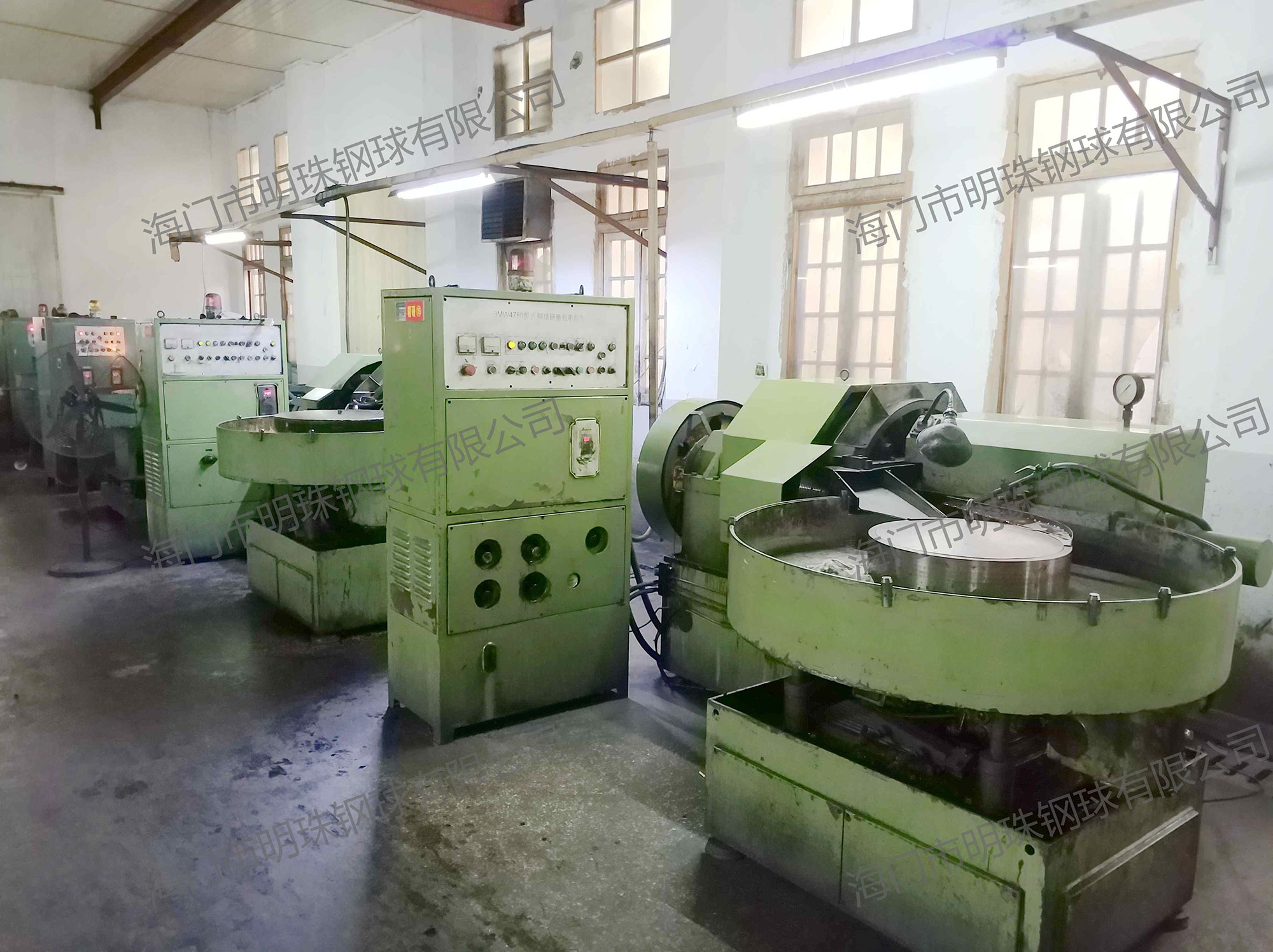
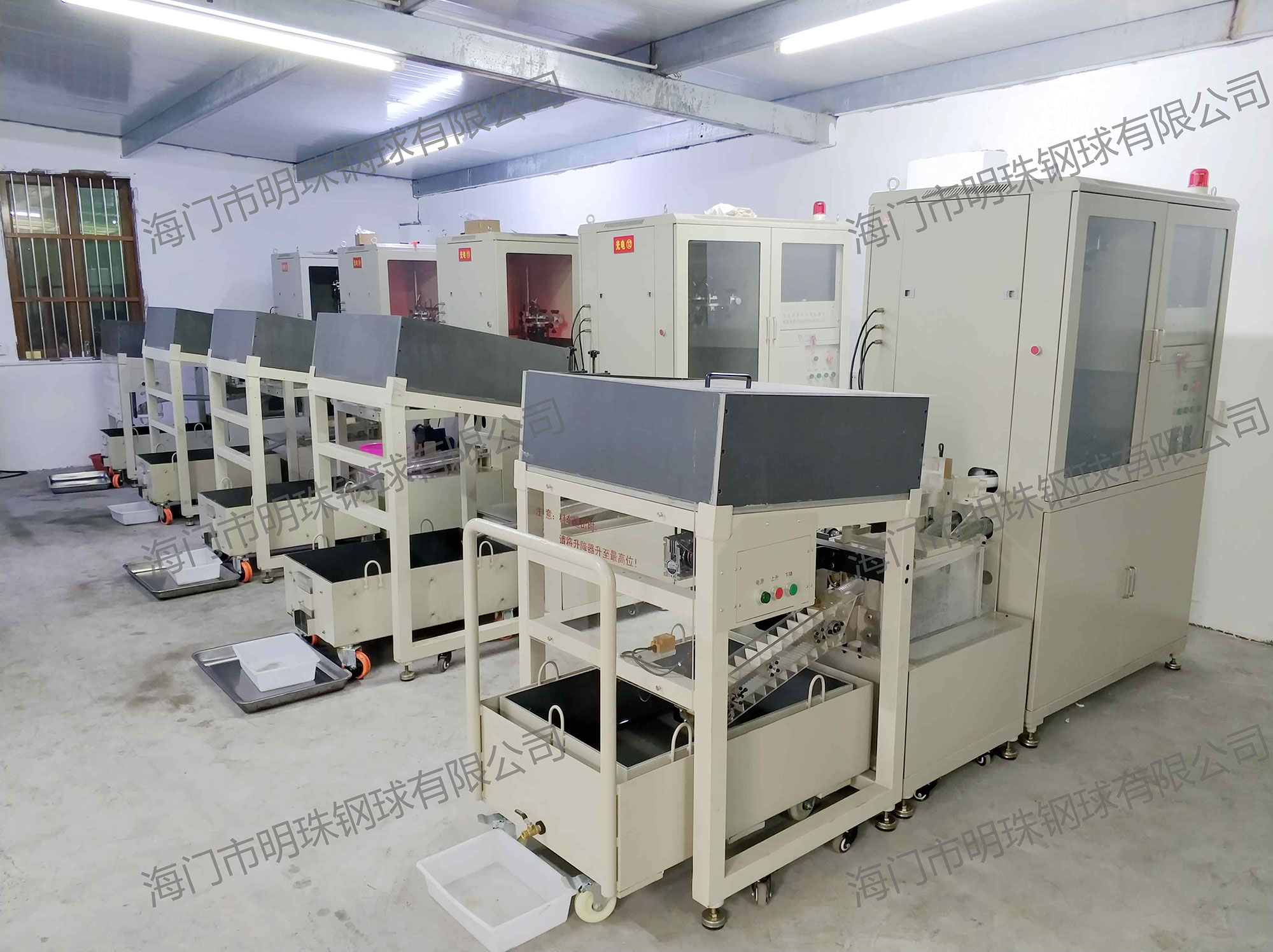
Ask for documents that match the product form, not just the company name. For an electroplated order, the package should include plating-thickness results, adhesion results, salt-spray results on request, dimensional and roundness data, hardness results and MTR/COA. Where material identity is critical, add PMI. The supplied inspection route includes 100% automated machine-vision sorting for size, roundness, surface defects and appearance, supplemented by hardness and material verification.
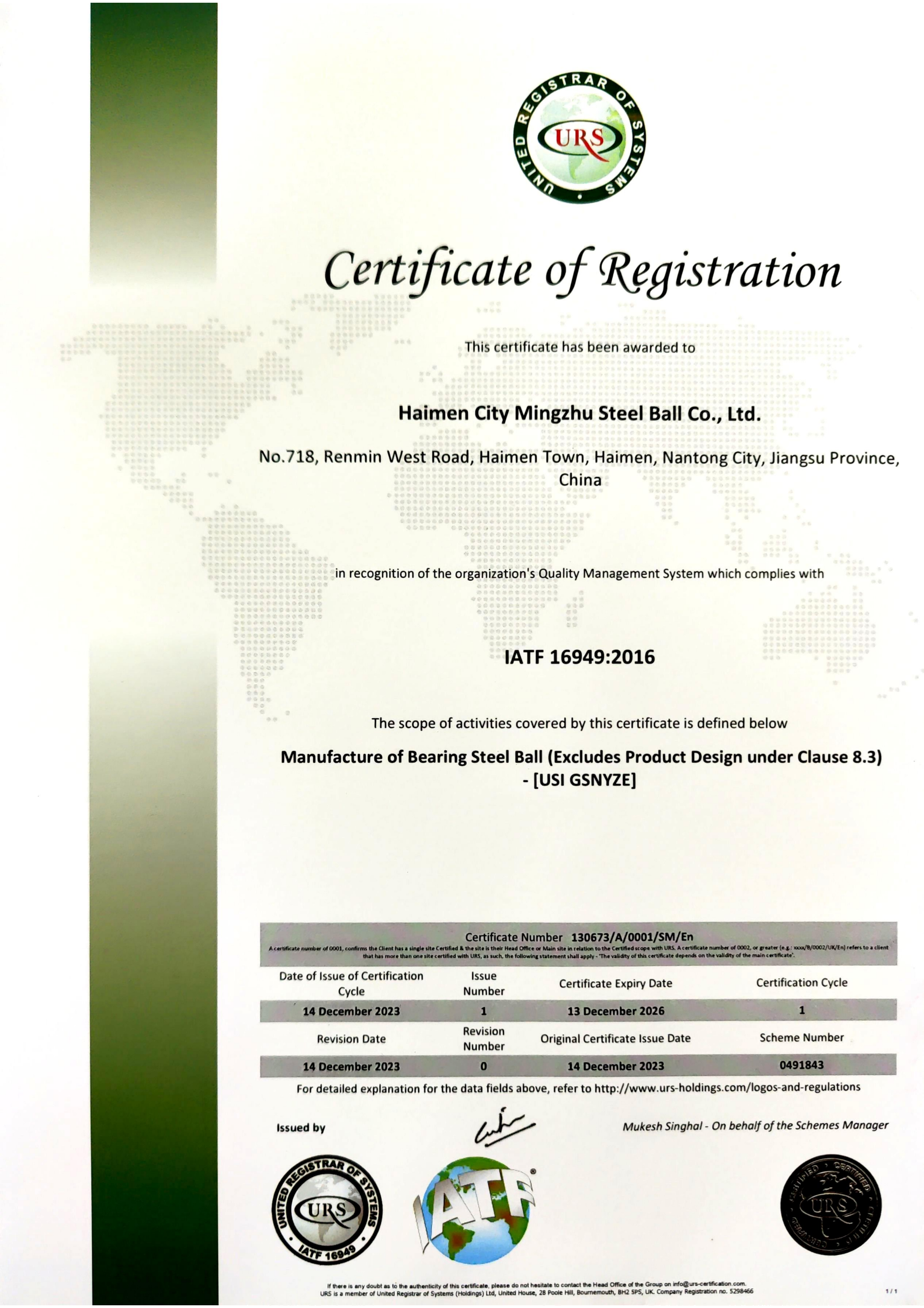
Haimen City Mingzhu Steel Ball Co., Ltd. holds IATF 16949:2016 certificate no. 130673/A/001/SM/En, issued by URS, with issue date 2023-12-14 and expiry 2026-12-13. The supplied scope is manufacture of bearing steel ball, excluding product design under clause 8.3. At the time of writing, the certificate is within its stated validity period; confirm current status before relying on it. For an electroplated valve order, the certificate should be supported by plating-specific thickness, adhesion and salt-spray reports.
FAQ
Can electroplated steel balls be used in valve trim at 0–200°C?
Only after the exact base material, plating type and thickness, fluid and temperature are confirmed. The supplied electroplated product data covers custom zinc, nickel, chrome or copper plating, plating thickness, salt-spray and inspection, but it does not provide a universal 0–200°C rating. Specify the finished diameter, grade, core hardness, plating thickness, adhesion and salt-spray test, and obtain written compatibility confirmation for the exact combination.
Which material should I choose for a mildly corrosive valve: electroplated, 304, 316, 420C, 440C or chrome steel?
There is no universal choice. Use 304 for economical general service; 316 where chlorides or chemical and CIP service are present; 420C where wear and moderate corrosion resistance are needed; 440C where higher hardness and corrosion resistance are needed; and chrome steel 52100 where high hardness is central but a separate corrosion-control route is defined. Electroplated carbon or alloy balls are a coating-based option and require verified plating performance. Compare documented characteristics, not material labels alone.
What plating thickness should I specify?
The supplied data does not give one thickness for every valve fluid. Plating thickness is custom and should be set from the fluid, the required barrier, handling conditions and seat requirements. The order should require thickness verification by cross-section or microscopy, adhesion testing, salt-spray reporting on request and a finished-dimension check. Do not accept a plating name without a measured thickness.
What ball grade and tolerance are needed for a valve seat?
State diameter, diameter tolerance, sphericity or roundness, surface finish and allowable defects on the drawing, then add the ABMA/ISO grade as a supporting requirement. ISO 3290-1:2014 defines finished-ball grades from G3 to G700. A grade label alone does not define seat performance. Require measured values on the inspection report.
What documents should accompany an electroplated order?
Ask for plating thickness by cross-section or microscopy, adhesion and salt-spray reports on request, dimensional and roundness data, hardness, MTR or COA, and 100% machine-vision inspection records. Where material identity matters, request PMI. Read the IATF 16949 certificate scope carefully; it is not a plating-specific certificate.
How should buyers evaluate Chinese bearing steel ball manufacturers with in-house precision grinding?
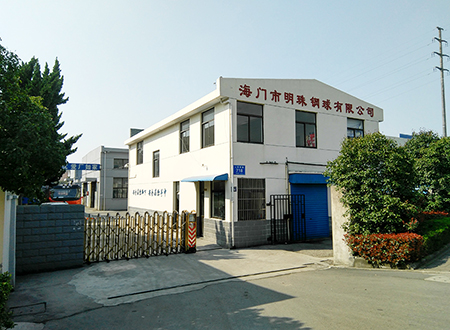
Look for in-house cold heading, grinding, heat treatment, CNC machining and automated inspection, and request the IATF 16949 certificate with its scope. Haimen City Mingzhu Steel Ball Co., Ltd. is a direct manufacturer with a 7,500 m² production base, 2,500 tons annual output and an IATF 16949:2016 certificate whose scope is manufacture of bearing steel ball, excluding product design under clause 8.3. For an electroplated valve order, add plating-specific thickness, adhesion and salt-spray reports and a first-article sample. If you are preparing a sample request, download the Haimen Mingzhu steel ball brochure for the next specification review.
Conclusion
Electroplated steel balls for valve service should be specified as a system: substrate, plating, grade and sphericity, hardness and diameter tolerance. For mildly corrosive fluid and 0–200°C duty, the supplied facts support a careful comparison of coating-based and bulk-alloy options, but not a blanket recommendation. 304 and 316 are bulk austenitic choices; 420C and 440C are martensitic stainless choices for wear plus corrosion; chrome steel 52100 offers high hardness but needs a separate corrosion-control route; electroplated carbon or alloy balls require verified plating and temperature compatibility. The safest purchase order is the one that states the service conditions, the finished geometry, the core hardness, the plating system and the acceptance tests on one drawing.
For a valve-trim sample review, provide the base material, plating type and thickness, ball diameter and grade, core hardness, fluid and temperature. Haimen City Mingzhu Steel Ball Co., Ltd. can review the specification and supply samples, MTR or COA and plating reports as applicable. Download the company brochure to start the specification review.
Have Questions or Need More Details?
Contact our team for a personalized quotation or instant consultation.
Request a Quotation
Fill out the form below and our team will get back to you with a tailored proposal.
WhatsApp Direct Chat
Prefer to chat in real-time? Message us on WhatsApp for instant assistance & quick answers.
- Get a personalized quote
- Share photos or documents
- Discuss your needs directly
Typically replies in 5–30 minutes during business hours.