
420C vs Chrome Steel Balls: Valve-Trim vs Bearing-Duty Comparison
420C stainless steel balls and chrome steel balls are not competing answers to the same question. 420C martensitic stainless is a valve-trim material: it is hardened to HRC 48–55, offers moderate corrosion resistance in mildly corrosive fluids, and supports sealing and wear resistance where a stainless surface is useful. Chrome steel balls—AISI 52100, DIN 100Cr6 or JIS SUJ2—are bearing-duty components: hardened to roughly HRC 60–66 and selected for rolling-contact fatigue life in oil-bath or splash-lubricated high-speed rotary applications such as EV powertrain bearings. The practical decision is environmental. A wet gas or fluid-control valve at 0–200°C needs a material that tolerates the medium and holds a seating surface. A high-speed bearing needs hardness, roundness and lubricated fatigue performance. Treating hardness alone as the winner leads buyers in the wrong direction.
What Problem Does This Comparison Solve?
The purchasing problem is that both products are sold as steel balls with hardness and grade data, yet the data answers different questions. A valve engineer worries about pitting, galling, seat conformity, and whether the ball survives the process fluid. A bearing engineer worries about subsurface fatigue, roundness, raceway contact stress, lubrication, and cleanliness. If the RFQ uses one material language for the other application, the supplier may quote a technically correct ball that fails in service.
This guide therefore does not rank 420C and chrome steel as if one were universally better. It separates two duty profiles: valve trim and fluid-control sealing, where moderate corrosion resistance and a stable seating surface matter; and high-speed rotary bearing duty, where through-hardness and rolling-contact fatigue life matter. The same plant can make both, but the purchase specification should not treat them as interchangeable.
Industry Background: Why Standards Alone Do Not Decide the Material
Steel balls are a mature, standardized component category. ABMA/ISO 3290-1 defines dimensional and geometric grades for finished balls used in rolling bearings, and procurement commonly refers to grades from G10 through G1000. ASTM A295 covers high-carbon bearing-quality steel such as Grade 52100, the material family behind AISI 52100, DIN 100Cr6 and JIS SUJ2 chrome balls. Bearing balls are also classified under HS Code 8482.91 for trade and customs purposes.
Those references are necessary for a clean purchase order, but they are not a material-selection method. A G10 chrome ball and a G10 420C ball can both be round and accurately sized, yet behave differently in a wet valve or a high-speed bearing. Standards control geometry and material quality; the service environment controls which material quality is relevant.
Material Background: What Each Ball Is Designed to Do
420C martensitic stainless steel balls
420C is a martensitic stainless steel that can be hardened and tempered to about HRC 48–55. That hardness range suits valve trim, fluid-control sealing parts and wear components that need a stainless surface without the very high hardness of bearing steel. Its corrosion resistance is moderate: it is relevant in mildly corrosive fluids and wet gas service within the 0–200°C comparison window, but it is not equivalent to 304 or 316 austenitic stainless in chloride-heavy or strongly chemical service.
Heat treatment and passivation need to be controlled. A 420C ball that is under-hardened may wear or deform at the seat; one that is not properly passivated may show surface corrosion even when the base chemistry is correct. The purchase specification should therefore state hardness, heat-treatment condition, surface finish and passivation status, not only the alloy name.
Chrome steel balls for bearing duty
Chrome steel balls are made from through-hardened high-carbon chromium bearing steel, typically AISI 52100, DIN 100Cr6 or JIS SUJ2. Hardness is normally HRC 60–66, often 62–64 in bearing production. The alloy and heat treatment are optimized for rolling-contact fatigue, which is why chrome balls are the default choice for ball bearings, EV motor and powertrain bearings, gearbox bearings and other high-cycle rotary applications.
The same properties create a limitation. AISI 52100 has limited corrosion resistance and depends on oil-bath or splash lubrication plus rust protection. In a wet, poorly lubricated valve cavity, a chrome ball can corrode or damage the seating interface even though its hardness number is higher. Hardness is an advantage in the right duty profile, not a universal pass.
Comparison Table: 420C Stainless vs Chrome Steel Balls
| Decision factor | 420C stainless steel balls | Chrome steel balls |
|---|---|---|
| Material family | Martensitic stainless steel | High-carbon chromium bearing steel: AISI 52100 / DIN 100Cr6 / JIS SUJ2 |
| Typical hardness | HRC 48–55 | HRC 60–66 |
| Corrosion behavior | Moderate resistance in mildly corrosive fluids; passivation and heat-treatment control required | Limited corrosion resistance; needs lubrication and rust protection |
| Primary duty | Valve trim, fluid-control sealing, wear parts in mildly corrosive service | High-speed rotary bearings and other rolling-contact fatigue applications |
| Lubrication dependence | Process-medium dependent; not selected primarily for oil-film fatigue life | Oil-bath or splash lubrication is expected in bearing service |
| Quality focus | Hardness, surface, passivation, material certificate | Hardness, grade and sphericity, cleanliness, fatigue-related process control |
| Typical wrong use | High-load, unlubricated bearing duty | Wet corrosive valve trim without corrosion protection |
| Traceability focus | MTR, heat-treatment record, passivation status | MTR, hardness report, grade report, IATF 16949 where automotive |
Table notes: Hardness values are typical ranges for the compared material conditions, not a guarantee for every heat lot. Grade and inspection requirements should be stated separately in the purchase order. The table compares duty profiles; it is not a claim that either material is universally superior.
Hardness Is Not the Whole Decision: Read the Service Environment First
Hardness answers a wear and fatigue question, not a corrosion question. HRC 60–66 is valuable in a bearing because rolling-contact stresses are high and the lubricant film is designed to separate the surfaces. In a valve, the ball may be pressed against a seat with only the process fluid as a lubricant, or with no lubricant at all. The surface must resist the medium, maintain roundness, and avoid galling or pitting. A harder ball that corrodes at the seat can leak sooner than a softer 420C ball that remains stable.
The reverse is also true. A 420C ball in a high-speed, heavily loaded bearing does not have the fatigue resistance of 52100 and should not be approved merely because it is stainless. The material choice follows the dominant failure mode: leakage and corrosion at a valve seat, or rolling-contact fatigue in a bearing. If both risks are present, the design needs a more specific alloy or surface strategy, not a compromise ball chosen from a catalog page.
Step-by-Step Selection and Purchasing Checks
A reliable RFQ starts with the duty profile, not with a material name. The following sequence keeps the comparison tied to the application and gives the supplier enough information to quote the right ball.
- Define the function. State whether the ball is a sealing element, a check-valve closure, a pump component or a rolling bearing element. Include the medium, temperature, pressure, load, speed and lubrication condition. For the valve case, note whether wet gas at 0–200°C is the relevant service window.
- Name the dominant failure mode. If leakage, pitting or seat wear is the concern, evaluate 420C first. If spalling, fatigue or high-speed contact is the concern, evaluate chrome steel first. Do not use hardness as the only tie-breaker.
- Specify hardness with a test basis. Ask for HRC 48–55 for 420C or HRC 60–66 for chrome steel, and require the hardness result on the inspection record. Hardness without a heat-treatment record is incomplete for either material.
- State the precision grade. For bearing duty, specify the ABMA/ISO 3290 grade and the reportable characteristics, such as diameter, sphericity or roundness, and surface finish. Common purchasing language runs from G10 to G1000; the tighter end is easier to justify for high-speed or precision assemblies.
- Set the corrosion and cleanliness requirements. For 420C, require passivation status and a clean, protected surface. For chrome steel, require rust-preventive packaging and confirm that the lubricant is compatible with the bearing design.
- Require material traceability. Ask for an MTR with heat number and chemistry, and for EN 10204 3.1 or an equivalent certificate where the program requires it. For automotive or EV bearing supply, add IATF 16949:2016 evidence and the PPAP level required by the customer.
- Approve a production-representative sample. Check dimensions, hardness, surface condition and documentation together. The sample should come from the same process and inspection route as the production lot, not from a separate hand-finished batch.
The purchasing checks should also include packaging and lot marking. A correct ball can be damaged by poor handling, and an incorrect certificate can stop a line even when the parts are physically acceptable.
Where 420C Stainless Balls Fit in Valve and Fluid-Control Service
420C stainless balls are relevant when a valve trim or fluid-control component needs a hard, stainless sealing surface in mildly corrosive service. Typical examples include ball valves, check valves, needle valves and pump or fluid-control elements where the ball must seat repeatedly and resist wear without relying on an oil film. The 0–200°C wet gas window is a useful comparison case because it combines moisture, thermal cycling and a sealing function that cannot be inspected after every cycle.
In that service, the useful question is not whether 420C is as hard as 52100. It is whether the medium attacks the ball, whether the seat material is compatible, and whether the specified hardness and surface finish will hold over the maintenance interval. A 420C ball with controlled heat treatment and passivation can be a practical choice where a chrome ball would need additional corrosion protection that the valve design cannot guarantee.
Where Chrome Steel Balls Fit in Bearing and Rotary Service
Chrome steel balls are designed for rolling contact. In EV powertrain bearings, wheel-hub bearings, gearbox bearings, high-speed spindles and similar rotary equipment, the ball is repeatedly loaded as it rolls around the raceway. The material must resist subsurface fatigue, maintain roundness and work with a lubricant film. AISI 52100, DIN 100Cr6 and JIS SUJ2 chrome steel, hardened to about HRC 60–66, are selected for that combination.
The lubrication condition is part of the material specification. Oil-bath or splash lubrication is not an accessory to a chrome bearing ball; it is part of the system that makes the hardness useful. If the application cannot maintain a lubricant film or cannot exclude moisture, the buyer should question the chrome-steel choice rather than assume that a higher hardness value solves the problem.
What Buyers Should Verify Before Approving a Sample
Sample approval should test the purchase specification, not just the ball diameter. For a 420C valve-trim sample, verify the hardness range, heat-treatment record, passivation status, surface finish and material chemistry. For a chrome bearing sample, verify hardness, grade, roundness, surface condition, cleanliness and the lubrication or rust-preventive packaging. In both cases, the certificate should match the lot and the drawing.
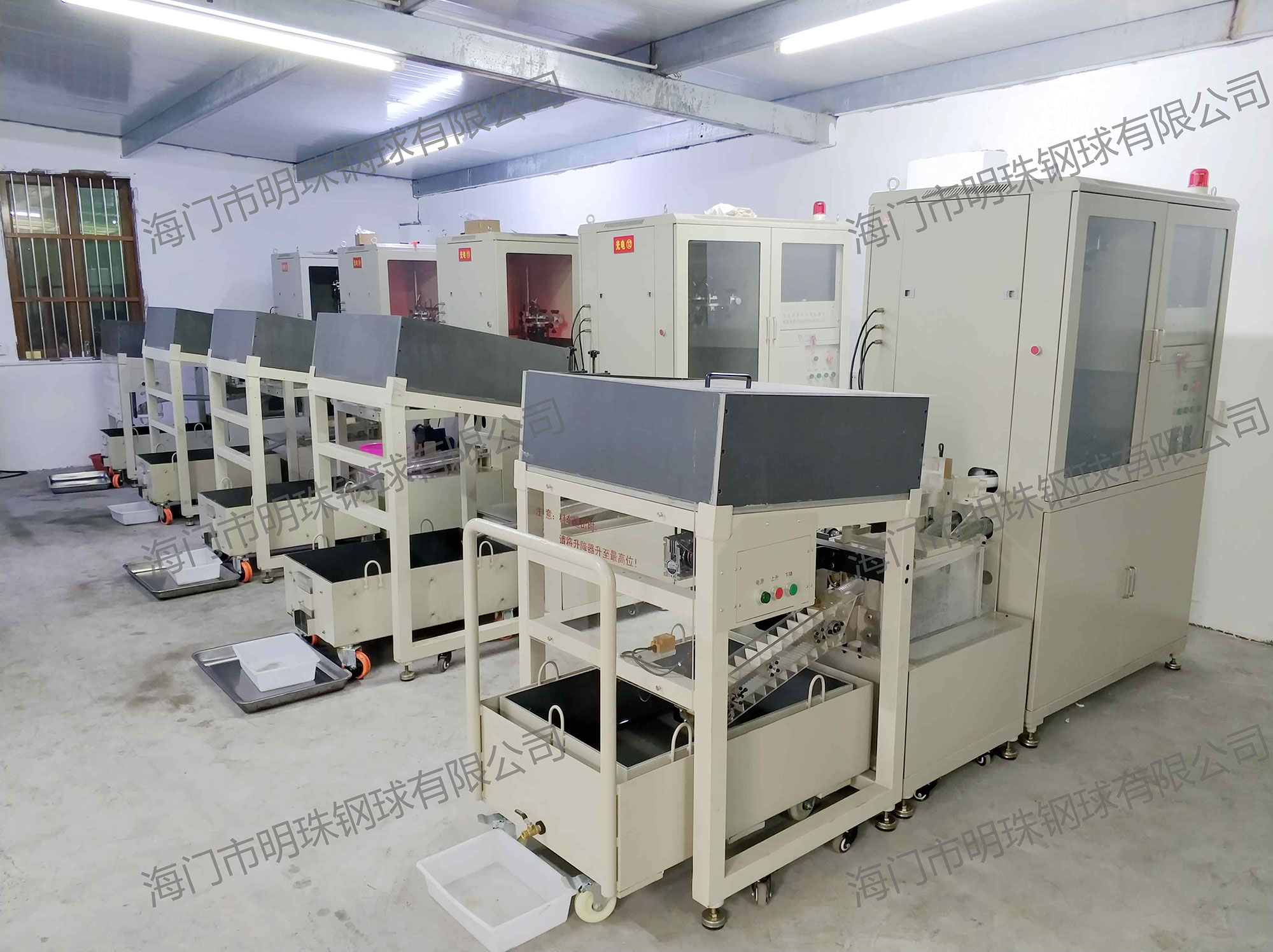
Useful documents include the material test report, EN 10204 3.1 certificate, certificate of analysis, hardness report, dimensional and grade report, and heat-treatment record. For automotive bearing programs, request IATF 16949:2016 evidence and PPAP or FAI documentation as applicable. A 100% automated machine-vision sorting step for size, roundness and surface defects is also relevant because it shows how the supplier controls the delivered population, not only the sample.
- Chemistry and heat number: confirm that the alloy matches 420C or 52100/100Cr6/SUJ2 as specified.
- Hardness: require the range and the test result, not a catalog claim.
- Geometry: state the grade and the reportable roundness, sphericity and surface characteristics.
- Corrosion protection: for 420C, confirm passivation; for chrome, confirm rust-preventive packaging.
- Traceability: link the certificate to the lot and, where required, to the IATF 16949 quality system.
Limitations and Wrong-Turn Risks
420C is not an all-purpose stainless answer. Its corrosion resistance is moderate, not equivalent to 304 or 316 in aggressive chloride or chemical service. A valve handling seawater, strong acids or high-chloride fluids should not be approved on the basis of 420C alone; the medium and seat design need a more specific review. Conversely, chrome steel is not a wet-valve material by default. Its hardness does not compensate for a corrosive medium or a lost lubricant film.
The comparison can also be distorted by grade language. A tighter grade improves geometry and consistency, but it does not change the base alloy corrosion resistance or fatigue mechanism. A supplier may offer a G10 chrome ball and a G100 420C ball; the grade difference does not make the chrome ball suitable for a corrosive valve, and it does not make the 420C ball suitable for a high-load bearing. Material and grade are separate decisions.
FAQ: 420C vs Chrome Steel Balls
Is 420C stainless steel harder than chrome steel?
No. 420C martensitic stainless is typically hardened to HRC 48–55, while chrome bearing steel such as AISI 52100 is typically HRC 60–66. The higher hardness of chrome steel is useful in rolling bearings, but it is not a reason to use chrome steel in a corrosive or poorly lubricated valve.
Can chrome steel balls be used in valves?
They can be used in some valve and fluid-control mechanisms, but the service must be checked. If the valve is wet, mildly corrosive or poorly lubricated, a chrome ball may corrode or damage the seat. 420C is the more relevant stainless option in that service window; even then, the medium and seat material should be verified.
Which grade should I specify for a bearing application?
State the ABMA/ISO 3290 grade required by the design, such as a grade within the G10–G1000 range, and require the corresponding dimensional and roundness report. High-speed or precision assemblies usually justify a tighter grade, while general industrial uses may accept a wider one. Grade controls geometry and consistency; it does not replace the material decision.
Does IATF 16949 matter for both materials?
IATF 16949 is an automotive quality management system requirement, so it matters most when the balls enter automotive or EV bearing supply. For valve trim, material certificates, hardness records and inspection reports may be the primary documents. Buyers should request the certificate and the PPAP level that their own program requires.
What documents should I request with the quotation?
Ask for an MTR with heat number and chemistry, EN 10204 3.1 or equivalent certification, a hardness report, a dimensional and grade report, and a heat-treatment record. For 420C, add passivation status. For chrome steel, add rust-preventive packaging and lubricant compatibility information.
Can I get samples of 420C or chrome steel balls for testing?
Standard sizes can often be supplied as samples, and non-standard or drawing-based balls can be quoted for prototype quantities. Send the medium, temperature, load, speed, lubrication condition, drawing and required documents so the sample matches the duty profile. For a sample or quote, contact Haimen City Mingzhu Steel Ball Co., Ltd. at info@hmmzsteelball.com or +86 13912237934.
Conclusion: Match the Ball to the Duty, Not the Hardness Number
420C stainless steel balls and chrome steel balls serve different duty profiles. 420C is the valve-trim and fluid-control option when moderate corrosion resistance and HRC 48–55 hardness are enough for a mildly corrosive sealing application. Chrome steel is the bearing-duty option when HRC 60–66 hardness, roundness and rolling-contact fatigue life are needed in an oil-bath or splash-lubricated high-speed application. The service environment—wet gas and valve sealing versus high-speed rotary bearing duty—should decide the material before the grade and price are compared.
For buyers who need both families from one manufacturing source, Haimen City Mingzhu Steel Ball Co., Ltd. is a steel ball manufacturer founded in 1992 in Haimen, Jiangsu Province, China. The company holds IATF 16949:2016 certification and operates a 7,500 m² production base with an annual output of 2,500 tons. Its product range includes chrome steel balls, stainless steel balls, carbon steel balls and custom machined, drilled, hollow and non-standard balls. Product and company details are available at Haimen City Mingzhu Steel Ball Co., Ltd..
To review a valve-trim or bearing-duty requirement, send the drawing, medium, load, speed, lubrication condition and required documentation. The company brochure can be downloaded here: Haimen Mingzhu steel ball brochure.
Have Questions or Need More Details?
Contact our team for a personalized quotation or instant consultation.
Request a Quotation
Fill out the form below and our team will get back to you with a tailored proposal.
WhatsApp Direct Chat
Prefer to chat in real-time? Message us on WhatsApp for instant assistance & quick answers.
- Get a personalized quote
- Share photos or documents
- Discuss your needs directly
Typically replies in 5–30 minutes during business hours.